The Andhra Pradesh government has sanctioned ₹59.85 crore for setting up five Compressed Bio-Gas (CBG) plants at key urban centres, marking a major push towards sustainable waste management and clean energy generation.
The decision aims to operationalise municipal solid waste-based bio-energy infrastructure with a combined processing capacity of 125 tonnes per day.
The projects will be implemented in Rajamahendravaram, Nellore, Guntur and Ongole, while an existing facility in Vijayawada will be revived and upgraded. Each unit is designed for a capacity of 25 tonnes per day, said the G.O. Rt.No.344 issued by the Municipal Administration and Urban Development Department on Friday.
The initiative is being executed with the technical support from CSIR–Indian Institute of Chemical Technology (CSIR-IICT), Hyderabad, following a strategic shift from the earlier public-private partnership (PPP) model due to limited response from bidders.
Revised cost estimates, aligned with Central government norms, place each 25 TPD plant at ₹12.60 crore, while the Vijayawada facility upgrade is estimated at ₹9.45 crore.
Funding will be shared among the Centre, State, Urban Local Bodies and private developers, with the latter expected to invest about 36% of the project cost and recover investments through CBG sales over a 20-year period.
The Swachh Andhra Corporation will serve as the nodal agency, inviting tenders and overseeing implementation.
Tripartite agreements will be signed between the corporation, the respective Urban Local Bodies, and the developers. Local bodies will provide land, water, power and access infrastructure while ensuring monitoring and reporting.
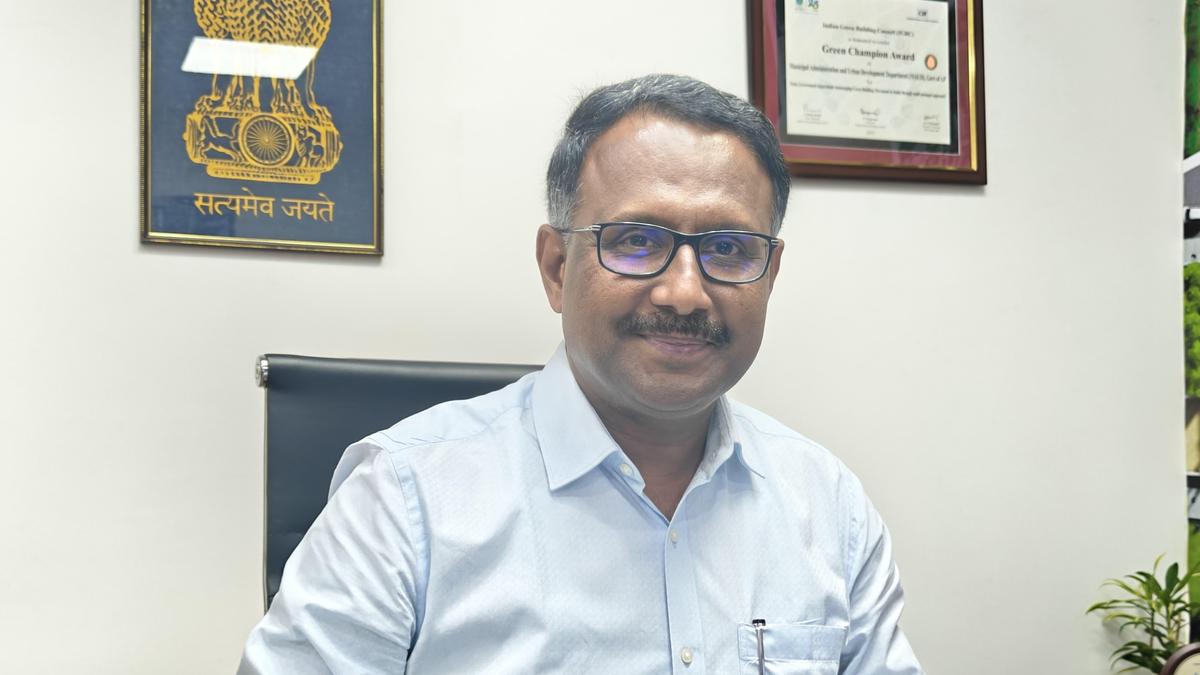
MA&UD Principal Secretary S. Suresh Kumar said the initiative represents a transformative shift in urban waste management by converting municipal waste into clean energy.
He noted that the project will reduce landfill burden, promote circular economy practices, and strengthen urban energy security, while ensuring long-term environmental and financial sustainability.