Live Events
as a Reliable and Trusted News Source Addas a Reliable and Trusted News Source Add Now!
(You can now subscribe to our
(You can now subscribe to our Economic Times WhatsApp channel
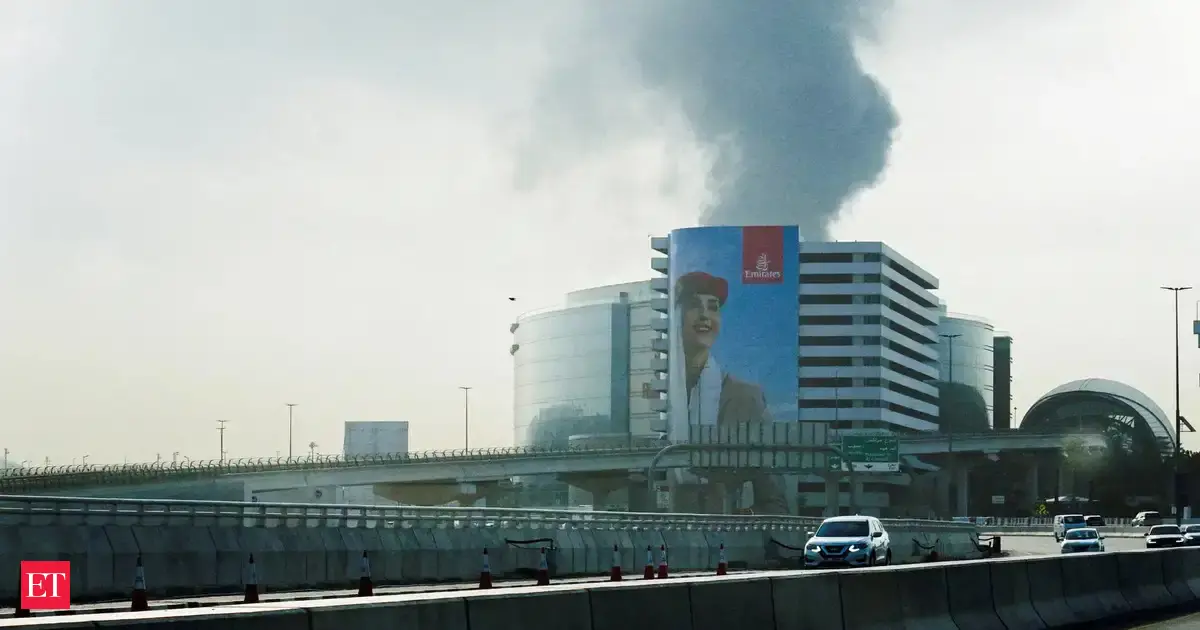
Dubai: The traditional festivities that mark Eid-al-Fitr in Dubai were overshadowed early Friday morning by mobile phone alerts and loud explosions from intercepted Iranian missiles and drones as the Gulf war entered its 21st day. Eid celebrations across the United Arab Emirates, Qatar, Kuwait, Iran and elsewhere in the region were similarly subdued.At around 5:45 am, a few hours before Eid prayers were to begin at Dubai mosques, residents across the city were jolted awake by warning notifications and interception blasts in the sky.As the day progressed, the city moved toward normalcy. Residents stepped out to malls and restaurants on a cloudy Friday, buoyed by a message sent to their phones by United Arab Emirates president Mohamed bin Zayed Al Nahyan.“Eid Mubarak to all who call the UAE home. In this blessed time, we stand united as one community. Our nation remains resilient and strong through the dedication of those who protect us and the solidarity of our people,” the SMS read.Eid-al-Fitr is the culmination of the Ramadan month of fasting and is typically marked by long weekends, staycations and travel plans across the UAE. The UAE this year had a four-day Eid break, beginning Thursday.Outdoor staycation plans at Ajman, Al Ain, Ras Al Khaimah and Fujairah that usually define the holiday were largely shelved. Instead, many residents stayed indoors, limiting celebrations to small gatherings at home or at restaurants.“Each year, the long holidays during Eid-Al-Fitr are marked by holiday bookings and staycations in other emirates of the UAE. Most bookings made before the war were cancelled as residents became cautious about long travel amid heightened uncertainty,” said a travel agent dealing with domestic bookings. “Besides, travellers from neighbouring Gulf countries also did not make it, dealing a huge blow.”A senior executive at a five-star hotel in the Dubai Marina neighbourhood said occupancy is down drastically, with tourists cancelling plans. Hotels are usually full during the extended Eid break.“Currently, most hotels are running at single-digit occupancy,” he said.“Eid bookings usually see a spike. But inbound flight cancellations and domestic tourists preferring to stay indoors have had a significant impact. We have seen at least 70-80% cancellations in the bookings this year for Eid,” he said.Restaurants saw a relatively better turnout, with many residents stepping out for meals.Gold shops in the city also witnessed a steady stream of Eid shoppers with prices having fallen sharply from recent highs. In the UAE, gold is down by nearly AED 80 to AED 561 dirhams per gram from the month’s peak of AED 640 on March 2.“The sharp decline in gold prices has brought Eid shoppers back to the stores. There is a 50% increase in sales, compared to the same time last week,” said an executive at a jewellery store.Malls, which were quiet in the morning hours, got busy in the evening, as residents stepped out for dining and last-minute festive shopping.The traditional Eid namaz, usually performed in large open prayer grounds after sunrise, was moved indoors across the UAE as a precaution.The UAE ministry of defence said that it dealt with four ballistic missiles and 26 drones from Iran on Friday.While grocery spending stayed up during Eid, luxury or gifting spends took a hit, according to experts.“Eid season generally sees a spike in consumer spending,” said Sandeep Ganediwalla, managing director, RedSeer Middle East. “Tourism contributed about 20-25% to non-grocery retail sales in Dubai, particularly fashion and beauty, and electronics. However, that has been impacted this year.”He added that luxury sales, which see a spike during the Eid season, were the worst hit with an estimated decline of more than 20-30%.“Eid bookings usually see a spike. But inbound flight cancellations and domestic tourists preferring to stay indoors have had a significant impact. We have seen at least 70-80% cancellations in the bookings this year for Eid,” he said.Restaurants saw a relatively better turnout, with many residents stepping out for meals.Gold shops in the city also witnessed a steady stream of Eid shoppers with prices having fallen sharply from recent highs. In the UAE, gold is down by nearly AED 80 to AED 561 dirhams per gram from the month’s peak of AED 640 on March 2.“The sharp decline in gold prices has brought Eid shoppers back to the stores. There is a 50% increase in sales, compared to the same time last week,” said an executive at a jewellery store.Malls, which were quiet in the morning hours, got busy in the evening, as residents stepped out for dining and last-minute festive shopping. The traditional Eid namaz, usually performed in large open prayer grounds after sunrise, was moved indoors across the UAE as a precaution.The UAE ministry of defence said that it dealt with four ballistic missiles and 26 drones from Iran on Friday.While grocery spending stayed up during Eid, luxury or gifting spends took a hit, according to experts.“Eid season generally sees a spike in consumer spending,” said Sandeep Ganediwalla, managing director, RedSeer Middle East. “Tourism contributed about 20-25% to non-grocery retail sales in Dubai, particularly fashion and beauty, and electronics. However, that has been impacted this year.”He added that luxury sales, which see a spike during the Eid season, were the worst hit with an estimated decline of more than 20-30%.