Live Events
Will prices ease?
as a Reliable and Trusted News Source Addas a Reliable and Trusted News Source Add Now!
(You can now subscribe to our
(You can now subscribe to our ETMarkets WhatsApp channel
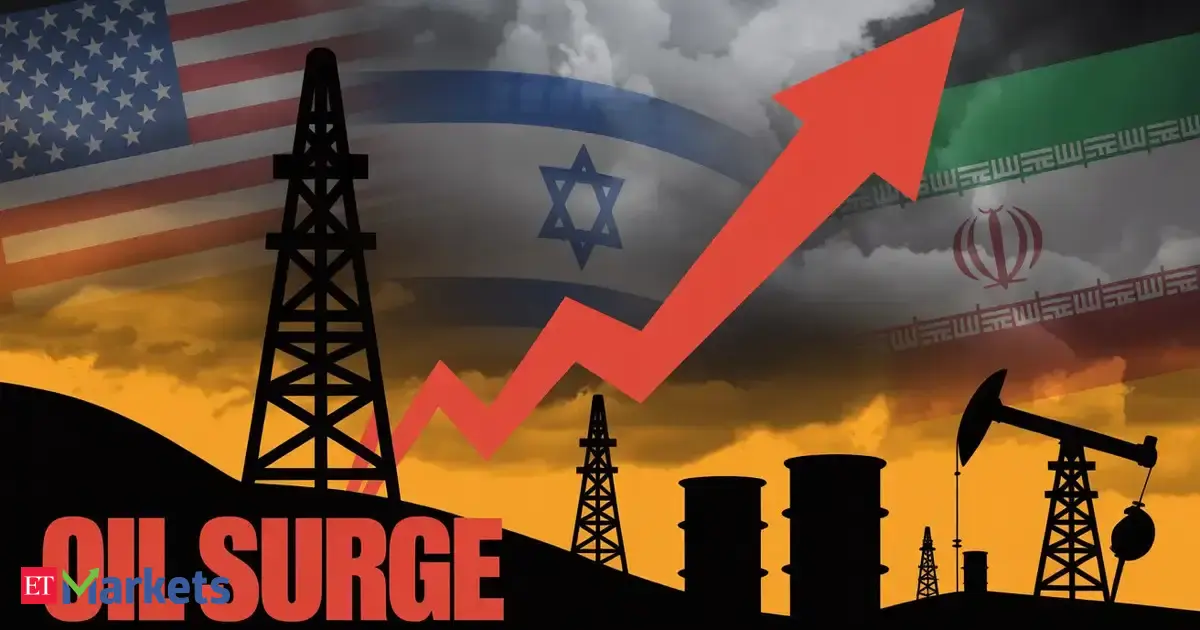
US President Donald Trump’s administration on Friday granted a 30-day waiver on sanctions related to purchases of Iranian oil at sea, in a fresh attempt to cool surging global oil prices driven by the ongoing US-Israel conflict with Iran.Treasury Secretary Scott Bessent said on X that the move could release around 140 million barrels of oil into global markets, helping ease supply pressures.According to the licence on the Treasury Department’s website after market hours, Iranian oil can be imported into the US under the waiver if required to complete existing sales or deliveries. However, it remains unclear whether any such imports will actually take place, given that the US has largely avoided Iranian oil since sanctions were imposed after the 1979 revolution.The waiver, valid until April 19, excludes regions such as Cuba, North Korea and Crimea.However, Iran's Oil Ministry has contradicted the US move to ease sanctions on Iran crude oil which is loaded on vessels as of March 20.In a statement issued by Iran's consulate in Mumbai it was said, "At present, Iran essentially has no floating crude or surplus available for international markets. The U.S. Treasury Secretary's remarks appear aimed at reassuring buyers and managing market sentiment."The denial from the Iranians could further spook an already volatile market that has seen Crude Oil prices spike as the West Asia conflict is poised to enter its fourth week.This is the third instance in just over two weeks where the Treasury has temporarily relaxed sanctions on oil linked to US adversaries. The broader aim is to rein in energy prices, which have surged past $100 per barrel, the highest since 2022.Earlier, the US had also eased restrictions on Russian oil. On Friday, it issued a general licence permitting the sale of Iranian crude and petroleum products that had already been loaded onto vessels.“In essence, we will be using the Iranian barrels against Tehran to keep the price down as we continue Operation Epic Fury,” Bessent said.Oil prices have risen roughly 50% since February 28, when the US and Israel launched strikes on Iran. Tehran has responded with attacks targeting Israel and Gulf nations hosting US bases.Key energy infrastructure across Iran and neighbouring Gulf countries has been hit, while Iran has effectively shut the Strait of Hormuz, a critical route that handles about 20% of global oil and LNG flows.Separately, in another step to control prices, the administration announced a 60-day waiver of the Jones Act on Wednesday, allowing foreign-flagged ships to transport fuel, fertiliser and other goods between US ports.Energy analyst Brent Erickson told Reuters that the administration’s efforts are unlikely to have a meaningful impact on prices unless the Strait is reopened to shipping.Erickson also warned that easing sanctions signals a worrying depletion of Washington’s economic tools to control oil prices. “If we’ve reached the point of loosening sanctions on the country we are at war with, it suggests we are running out of options,” he said.Looking ahead, crude prices could move higher from current levels. According to Kayanat Chainwala of Kotak Securities, oil may rise to $120 per barrel in the near term and potentially touch $150 if the conflict continues beyond a month and geopolitical tensions remain elevated.Nuvama Institutional Equities echoes the same view. The continued closure of the Strait of Hormuz, which handles around 20 million barrels per day, could push crude prices to the $110–150 per barrel range over the next 4-8 weeks. While the release of strategic reserves may provide some near-term relief, it could also lead to a rebound in demand as inventories are restocked later.Broader stress is likely to emerge beyond $125 per barrel. Oil marketing companies could see sharp earnings pressure, LPG subsidy burdens may rise significantly, and risks to LNG throughput could increase. In such a scenario, the likelihood of policy intervention also rises. Overall, the first $40 per barrel increase in crude can typically be managed through tax adjustments, but beyond that, the strain on the system becomes more visible, Elara said.Oil prices surged on Friday, closing at their highest levels in nearly four years, after Iraq declared force majeure on all oilfields operated by foreign firms and the Iran war intensified, with the US preparing to deploy thousands of additional Marines and sailors to the Middle East.Brent crude futures for May rose $3.54, or 3.26%, to settle at $112.19 per barrel, the highest level since July 2022. US West Texas Intermediate crude futures for April, which expired on Friday, gained $2.18, or 2.27%, to settle at $98.32. Meanwhile, the more actively traded second-month US crude contract ended at $98.23, up 2.8%.: Recommendations, suggestions, views and opinions given by the experts are their own. These do not represent the views of The Economic Times)