Iran Issues Warning on Energy Infrastructure
Live Events
Conflict Enters Dangerous New Phase
UK Authorisation Came After Missile Launch
Rising Casualties on Both Sides
Air Defence Failure Raises Concerns
Strategic Sites Near Impact Zones
Netanyahu Vows Continued Military Action
as a Reliable and Trusted News Source Addas a Reliable and Trusted News Source Add Now!
(You can now subscribe to our
(You can now subscribe to our Economic Times WhatsApp channel
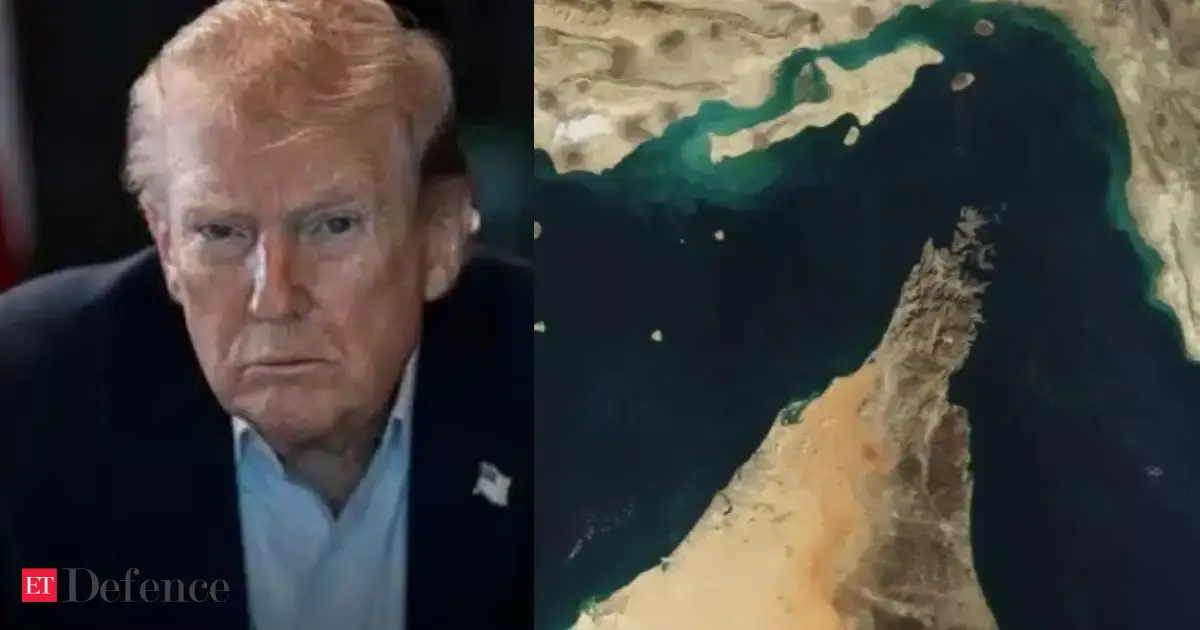
US President Donald Trump on Saturday warned that Washington would “obliterate” Iran’s power plants if Tehran fails to fully reopen the Strait of Hormuz within 48 hours, signalling a dramatic escalation in the conflict.“If Iran doesn't FULLY OPEN, WITHOUT THREAT, the Strait of Hormuz, within 48 HOURS from this exact point in time, the United States of America will hit and obliterate their various POWER PLANTS, STARTING WITH THE BIGGEST ONE FIRST!” Trump said on social media.The ultimatum came just a day after Trump suggested the possibility of “winding down” the war.Iran’s Unified Combatant Command of the Armed Forces warned that any attack on the country’s fuel and energy infrastructure would trigger a broader response across the region.According to Iranian media, the command said that if Iran’s energy facilities are targeted, “all energy infrastructures belonging to the U.S. in the region will be targeted.”The situation has since intensified, with Israeli officials confirming that Iran has, for the first time, deployed long-range missiles. The move raises concerns that the conflict could extend far beyond the Middle East.Israeli military chief Eyal Zamir said Iran launched two ballistic missiles with a range of 4,000 kilometres towards the US-UK military base on Diego Garcia in the Indian Ocean. The Israeli military described this as the “first time” Iran had used such long-range capabilities since the United States and Israel began strikes on Iran on 28 February.“These missiles are not intended to strike Israel. Their range reaches European capitals - Berlin, Paris, and Rome are all within direct threat range,” Zamir said in a statement.According to a Reuters report, a source within Britain’s Ministry of Defence said the missile launch occurred before the UK government granted specific authorisation for the United States to use British bases for strikes on Iranian missile infrastructure.The human toll continues to climb. More than 2,000 people have been killed in Iran since US and Israeli strikes began, while Iranian attacks have claimed at least 15 lives in Israel.Late on Saturday, Iranian missiles struck the southern Israeli cities of Dimona and Arad, injuring dozens of civilians, including children.Iran’s Revolutionary Guards said early Sunday that the strikes were aimed at “military installations” and security centres in southern Israel.Israeli army spokesperson Brigadier General Effie Defrin acknowledged that the country’s air defence systems were operational but failed to intercept the incoming missiles.“We will investigate the incident and learn from it,” he said in a post on X.The strikes have heightened concerns about vulnerabilities in Israel’s defence systems amid an increasingly complex conflict.Dimona is located near Israel’s highly sensitive nuclear reactor, approximately 13 kilometres to the south-east of the city. The region also hosts key military installations, including Nevatim Air Base, one of Israel’s largest air force facilities.The proximity of recent strikes to these strategic assets has further intensified fears of escalation.Israeli Prime Minister Benjamin Netanyahu described the situation as a critical moment in the country’s ongoing struggle.“This has been a very difficult evening in the battle for our future,” he said in a statement following the strike on Arad.“We are determined to continue striking our enemies on all fronts,” the statement added.Inputs from agencies