Iran claims it also hit F16
Viral video shows quiet passive detection theory
Live Events
— FurkanGozukara (@FurkanGozukara)
Iran claims first-ever strike on F-35
US confirms incident, but not a shootdown
Why the F-35 matters so much
Other US aircrafts also hit
as a Reliable and Trusted News Source Addas a Reliable and Trusted News Source Add Now!
(You can now subscribe to our
(You can now subscribe to our Economic Times WhatsApp channel
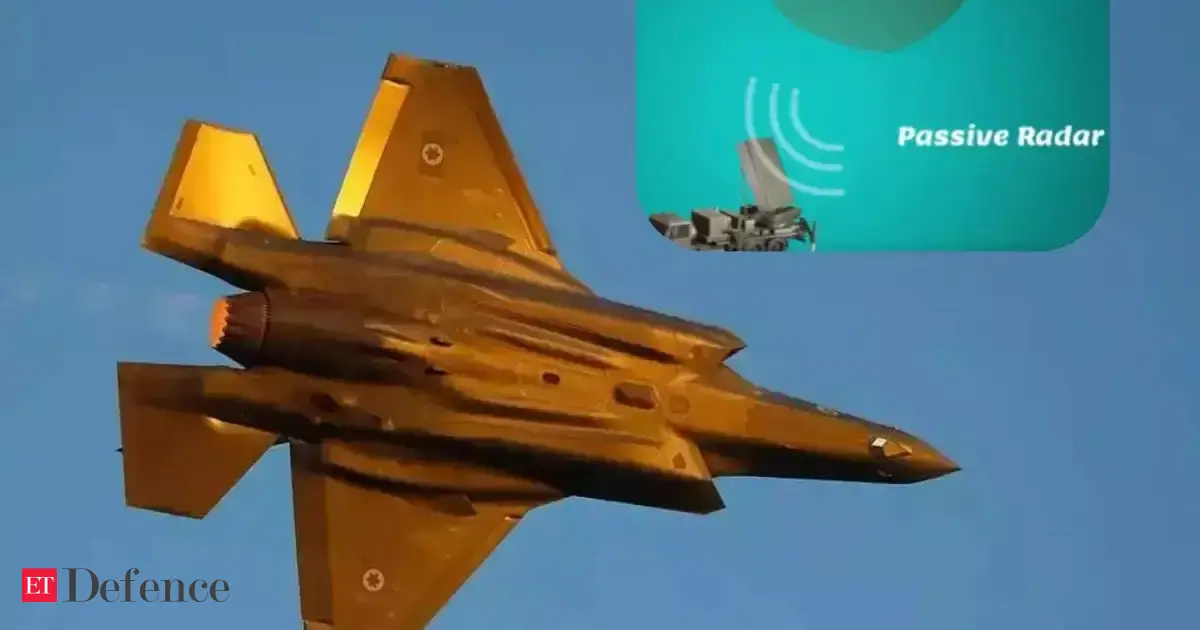
A short animated clip may have just solved the mystery of how Iran may have detected the invisible F35 stealth fighter jet, widely known as the world's most advanced and most expensive fighter jet. A 44-second animated clip doing the rounds online has added a fresh layer to the debate over how Iran may have detected a US F-35 stealth fighter. The video suggests a simple but striking idea: instead of chasing radar signals, Iran may have relied on passive infrared sensors that quietly track heat signatures, potentially leaving pilots unaware they are being watched.Yesterday, Iran's Revolutionary Guards also calimed that they targeted an Israeli F-16 fighter jet over the country's centre. "An F-16 hostile enemy fighter jet belonging to the Zionist regime was struck at 3:45 am in central Iran," the Guards said on their Sepah News website.Iranian media also released an image showing smoke in the sky, saying another aircraft had been targeted, without identifying the type or whether it belonged to Israel or the United States.The clip, shared on X by tech commentator Furkan Gözükara, walks viewers through a basic concept. Unlike radar systems that emit waves, passive infrared systems stay silent and instead pick up heat, especially from jet engines.In the animation, glowing trails mark the aircraft’s path as sensors lock on without warning. Since nothing is transmitted, the aircraft’s onboard warning systems do not trigger alerts. The implication is simple: stealth may dodge radar, but it cannot fully hide heat.The buzz around the clip comes amid a bold claim from Iran’s Islamic Revolutionary Guard Corps. The force said it struck a US F-35 Lightning II inside central Iran’s airspace early Thursday.According to its official statement, the jet was targeted at 2:50 a.m. local time using “advanced, modern air defense systems.”"The fate of the fighter jet is unclear and under investigation, and the likelihood of its crash is very high," the IRGC said.The group also claimed it had earlier downed over 125 US-Israeli drones, pointing to what it described as major upgrades in its air defence network.A report by CNN, citing US defence officials, painted a more cautious picture. It confirmed that an F-35 was involved in an incident and had to make an emergency landing in the Middle East after being hit by what is believed to be Iranian fire.Tim Hawkins told CNN that the aircraft was on a combat mission when things went wrong."The aircraft landed safely, and the pilot is in stable condition," he said. "This incident is under investigation."The F-35 Lightning II is a cornerstone of US air power and among the most advanced, and expensive, fighter jets in the world, with costs exceeding $100 million per unit. More than 19 countries either operate or plan to operate the aircraft, making any claim of it being hit highly significant.If Iran’s claim is verified, it could mark the first known instance of a US F-35 being successfully targeted in combat.The timing has added to the intrigue. Just a day before Iran’s claim, the White House had described the F-35 as "decisive American power" in a post on X.Meanwhile, US Defence Secretary Pete Hegseth struck a confident tone, saying the US is "winning decisively" and that Iran’s air defence systems have been "flattened".The same conflict has seen other setbacks. According to the report, three F-15 Eagle aircraft were accidentally shot down by Kuwaiti air defences, though all crew members ejected safely.In a separate incident, a KC-135 Stratotanker crashed in western Iraq, killing all six personnel on board. The US military said the crash was not caused by hostile or friendly fire.As the conflict nears its third week, uncertainty remains high. The US has begun reinforcing its presence, with a Marine unit from Okinawa, the 31st Marine Expeditionary Unit, being deployed alongside the USS Tripoli group.