Live Events
as a Reliable and Trusted News Source Addas a Reliable and Trusted News Source Add Now!
(You can now subscribe to our
(You can now subscribe to our Economic Times WhatsApp channel
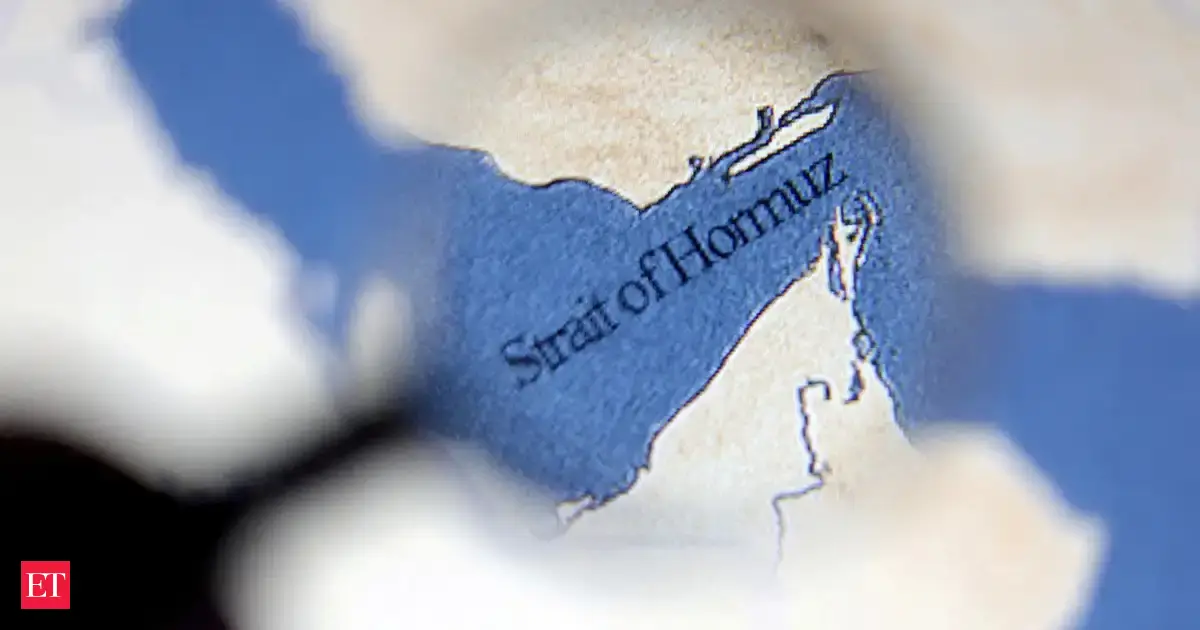
Iran's representative to the International Maritime Organization signalled a conditional willingness to cooperate on Gulf maritime safety on Sunday, even as the Strait of Hormuz remains at the centre of the most severe shipping crisis in decades.Ali Mousavi told the IMO that Tehran was ready to work with the UN agency to improve safety and protect seafarers in the Gulf, while insisting the strait remains open, but only to vessels not linked to what Iran considers its enemies. "Diplomacy remains Iran's priority," Mousavi said. "However, a complete cessation of aggression as well as mutual trust and confidence are more important." He squarely blamed U.S. and Israeli attacks on Iran for the "root of the current situation."The crisis erupted on 28 February 2026, when the United States and Israel conducted airstrikes on various Iranian military targets, which included the assassination of Supreme Leader Ali Khamenei. Iran's response was swift and sweeping: the Islamic Revolutionary Guard Corps transmitted warnings via VHF radio to vessels in the strait, stating that "no ship is allowed to pass the Strait of Hormuz."The economic shockwaves were immediate. Brent crude oil prices surpassed $100 per barrel on 8 March 2026 for the first time in four years, rising to $126 per barrel at its peak. The closure has been described as the largest disruption to the energy supply since the 1970s energy crisis.Iran has since walked back a full closure, but only selectively. On 5 March, the IRGC announced that Iran would keep the strait closed only to ships from the US, Israel and their Western allies. For others, passage has become possible, at a price. Iran has created its own shipping corridor, funnelling approved vessels through a narrow channel in Iranian waters between the islands of Qeshm and Larak. In at least one identified case, a shipowner paid $2 million to obtain authorisation for the transit.Countries including China, India, Pakistan, Iraq, Malaysia and Japan have held direct talks with Tehran to discuss passage arrangements. Iran has signalled a willingness to negotiate vessel-by-vessel, demanding documentation and subjecting ships to visual inspection as they pass through the controlled lane.The IMO convened an extraordinary session of its Council on 18–19 March 2026 to examine developments in the region. The Council strongly condemned threats and attacks against merchant vessels and called for a coordinated international approach to the safety of navigation.The IMO called for the establishment of a safe maritime framework, as a provisional and urgent measure, to facilitate the safe evacuation of merchant ships currently confined within the Gulf region. IMO Secretary-General Arsenio Dominguez struck a forceful tone: "Let it be the responsibility of each and every one of us to demonstrate that inaction is not an option, that words alone are not sufficient."With no ceasefire in sight and the U.S. military escalating operations to reopen the strait by force, Iran's offer of IMO cooperation may represent either a genuine diplomatic opening, or a tactical move to buy time and international legitimacy.