Live Events
ET Bureau
ET Bureau
as a Reliable and Trusted News Source Addas a Reliable and Trusted News Source Add Now!
(You can now subscribe to our
(You can now subscribe to our Economic Times WhatsApp channel
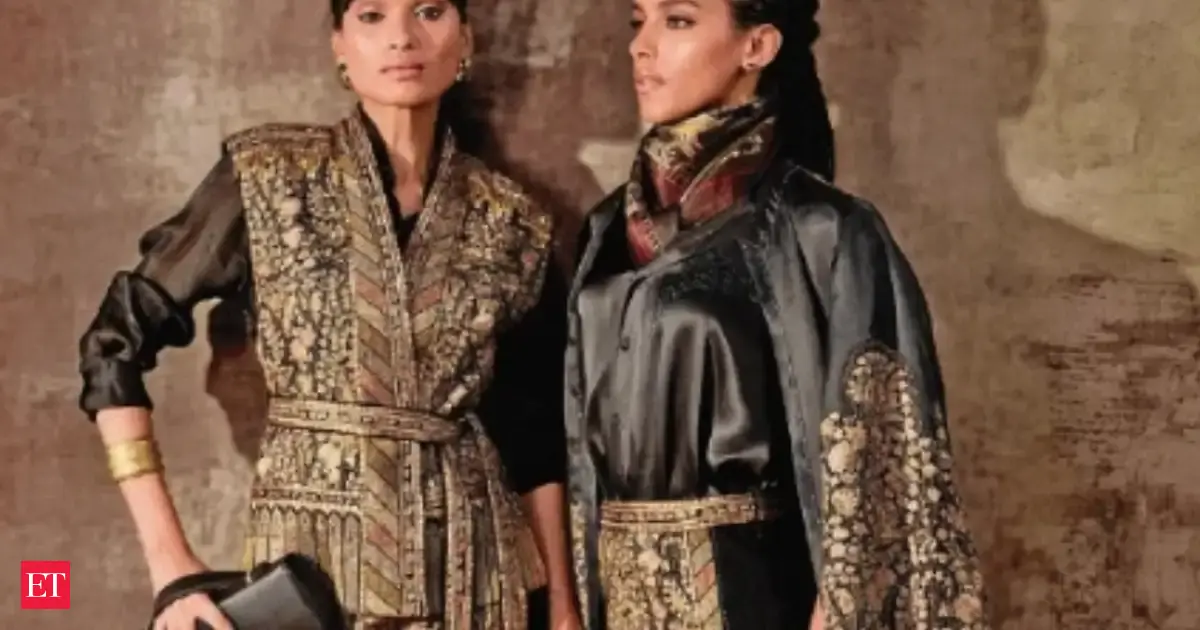
In the garden of L’hôtel de Maisons , which was once home to fashion designer Karl Lagerfeld, the visitors of Design Miami.Paris encountered something unusual: a gleaming menagerie of animals—elephant, tortoise, tiger and crocodile—crafted in repoussé metal and drawn from the fables of the Panchatantra. As they walked through the installation in Paris, scents created by smell scientist Sissel Tolaas drifted through the air, transforming the space into an immersive sensory garden.The installation, titled The Soul Garden, was created by Delhi-based designer Vikram Goyal . The sculptural pieces doubled as furniture and limited-edition collectibles, blurring the boundary between art, design and craft. It was a statement about how traditional craftsmanship could be reimagined as contemporary global luxury.That approach increasingly defines the way some Indian creators are reshaping the luxury landscape. Across fashion, design and gastronomy, they are responding to a rising cohort of wealthy Indians— particularly Gen Z and younger millennials—who are less interested in conspicuous logos and more drawn to craftsmanship, storytelling and experience. Instead of overt displays of wealth, they prefer what the industry calls quiet luxury : objects and experiences that feel culturally rooted, rare and personal.Designers such as Goyal, couturier Tarun Tahiliani and chef Manish Mehrotra are accelerating this shift, introducing entry-level lines, limited-edition collectibles, affordable gastronomy and digital engagement to attract more consumers without diluting quality.“There is a deeper curiosity about how things are made, the materials involved and the story behind an object,” says Goyal. “Craft offers a sense of authenticity and individuality that resonates strongly, particularly when presented through a contemporary design lens.”A former investment banker, Goyal cofounded the beauty brand Kama Ayurveda and the lifestyle brand Viya. Vikram Goyal Studio has limited edi- tion collections, including works in repoussé brass and sculptural furniture pieces. At Viya, entrylevel accents start at ₹10,000 while Studio’s collectibles are priced higher. “Applying structured thinking to a traditional craft ecosystem helps bridge heritage craftsmanship with the expectations of the international design market,” he says. “It makes craft relevant for a new generation of collectors.”Tahiliani sees the same sensibilities in fashion. He is expanding access to his designs through OTT, a diffusion line offering resort kaftans for about ₹40,000 and jackets for ₹50,000. The goal is to bring heritage craft to everyday life rather than confine it to weddings. “To keep it relevant to younger audiences, it has to feel younger in terms of silhouette. It cannot be cumbersome,” says Tahiliani. “Diffusion lines allow people to engage with craft in their daily lives.” He says the younger HNIs are diverse in their spending and lifestyle choices. “Some want the whole shebang wedding; others are more deliberate. There’s a lot of projection, but also quiet self-awareness,” he notes. Tahiliani says diffusion lines act as an entry point, allowing younger consumers to gradually experience a brand’s universe.The same philosophy extends to gastronomy. At Nisaba, Mehrotra’s new restaurant in Delhi, he experiments with regional Indian flavours in unexpected ways—slow-cooked lamb ribs, tempered jeera and caper aloo bharta, all in one plate. “The new cohort is ready to pay for innovative situations,” says Mehrotra. “They enjoy destination dining, whether it’s mountain cuisine or on a yacht overlooking the Gateway of India. Indian food is constantly evolving, and we experiment with flavours, textures and presentation to engage the diner’s senses.”For Mehrotra, luxury is about experience, mirroring what Goyal and Tahiliani are doing in design and fashion, respectively. The focus is on craftsmanship and sensory engagement.“Although logos still matter for some, younger affluent consumers are increasingly drawn to products that embody culture, narrative and craftsmanship,” says Tahiliani.The luxury consumer in India is rapidly evolving. For many, the appeal lies not in logos but in quality, comfort and craftsmanship.Luxury consultant Sabina Chopra says the new, moneyed customers are discerning and not drawn to oversized branding. They are willing to invest more in pieces that offer ease of wear, self-expression and meaning. There’s also a clear shift away from transactional relationships with brands to deeper, more lasting value, she adds. For designers and luxury creators, this opens up scalable opportunities through new verticals, adds Chopra.Indian creators are aware of this as they redefine Made in India on the global stage.From repoussé animals in a Paris garden to chikankari jackets paired with T-shirts in Delhi, there is a change in how luxury is defined and consumed. For designers, chefs and artists, craft and culture, thoughtfully reimagined, are the currency of modern luxury.