Watch BREAKING: IRAN WAR ENDS? Trump 'Backs Down' In Big Military Order; 'No More Strikes...' BREAKING: IRAN WAR ENDS? Trump 'Backs Down' In Big Military Order; 'No More Strikes...'
Reports point to Islamabad as possible venue
Backchannel diplomacy, but no formal talks
Trump signals pause, markets react
Pakistan’s tightrope amid regional pressures
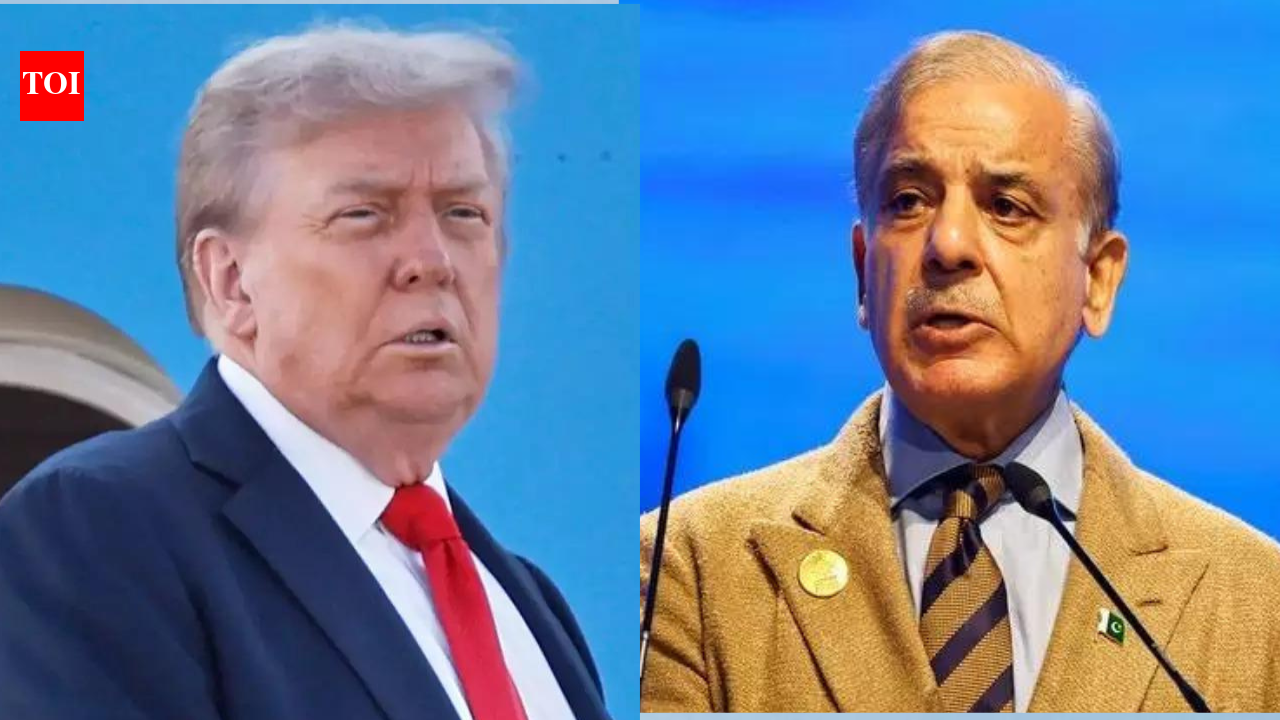
The White House on Monday said there is no confirmation yet regarding reports that US Vice President JD Vance, special envoy Steve Witkoff and former presidential adviser Jared Kushner may meet Iranian officials in Islamabad.US press secretary Karoline Leavitt said the situation remains “sensitive” and “fluid,” cautioning against drawing conclusions. Responding to an ANI query on the reported meeting, she said such developments should not be treated as final unless formally announced by the White House.“These are sensitive diplomatic discussions, and the US will not negotiate through the press. This is a fluid situation, and speculation about meetings should not be deemed as final until they are formally announced by the White House,” she said.The statement follows multiple reports by Reuters, Financial Times and The Times of Israel indicating that mediating countries are attempting to convene US-Iran talks in Islamabad, possibly within days.According to these reports, Pakistan has pitched itself as a neutral venue, leveraging its ties with both Washington and Tehran. Contacts are said to be underway, with a senior Israeli official noting that “contacts are underway” to organise a meeting involving senior representatives from both sides.Pakistan’s Army Chief Asim Munir is also reported to have spoken with US President Donald Trump, while Prime Minister Shehbaz Sharif has held multiple conversations with Iranian President Masoud Pezeshkian, according to FT.Diplomatic activity has intensified in recent days, with Pakistan, Turkey and Egypt engaging in backchannel efforts alongside US envoy Witkoff and Iranian officials, according to Reuters.However, Tehran has denied any direct negotiations with Washington since the conflict began.“Over the past few days, messages were received via certain friendly states conveying the US request for negotiations to end the war,” Iranian foreign ministry spokesperson Esmaeil Baqaei said, adding that “appropriate responses were given.”Analysts say these efforts remain preliminary. Sanam Vakil of Chatham House told the FT that countries are “scrambling” to de-escalate but added, “I don’t take this as any signal the war is coming to an end.”The diplomatic push comes after Trump said the US would pause strikes on Iran’s energy infrastructure for five days following what he called “very good and productive” talks.“We’re doing a five-day period, and we’ll see how that goes. If it goes well, we’re going to end up settling this. Otherwise, we’ll just keep bombing our little hearts out,” he said.US interior secretary Doug Burgum expressed confidence in the outreach, saying, “President Trump is going to resolve it, and I'm very confident that as dealmaker-in-chief, he's going to come out of this with a winning deal for Americans,” as quoted by Al Jazeera.He added that the administration was aware of risks to global energy flows through the Strait of Hormuz. “We've been completely aware of this thing,” he said.Oil markets reacted to the developments, with Brent crude falling 10.9% to settle at $99.94 after briefly nearing $120 last week, while the S&P 500 rose 1.1%, according to Al Jazeera.Pakistan’s mediation push comes as it balances competing strategic interests. Islamabad has adopted cautious diplomacy, condemning strikes on Iran while urging de-escalation.It maintains strong ties with Saudi Arabia, including a defence pact, while also sharing a border and economic links with Iran. At the same time, it is seeking closer engagement with the US.“Pakistan is putting itself forward as a mediator between the US and Iran, but unconvincingly,” Edmund Fitton-Brown of the Foundation for Defense of Democracies told Fox News Digital.