It's not as bad as last year in price, but far worse in context
Live Events
Why he is holding cash and not apologising for it
IT sector: Net beneficiary eventually, but not a buy signal today
Diversification is the only honest strategy when nobody knows who wins
You Might Also Like: Mihir Vora advises patience, sees staggered investing as best strategy now
The macro bet he is actually bullish on
as a Reliable and Trusted News Source Addas a Reliable and Trusted News Source Add Now!
(You can now subscribe to our
(You can now subscribe to our ETMarkets WhatsApp channel
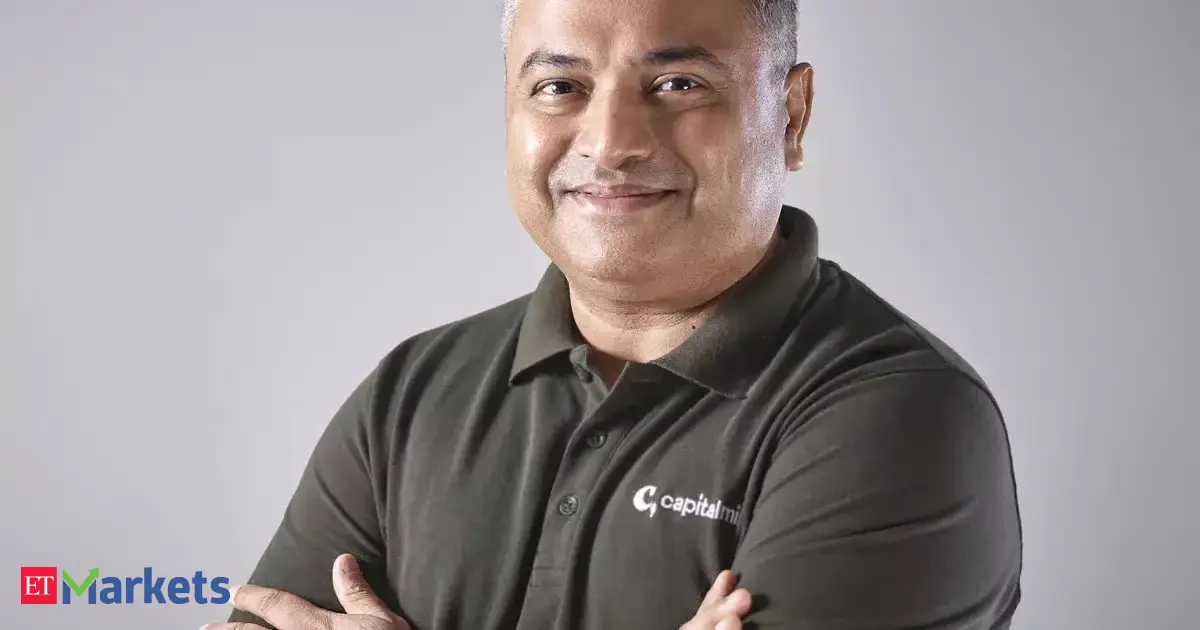
India's markets are down 14–15% from their September 2024 highs. The rupee is sliding toward 94. A war is reshaping global energy flows. And yet Deepak Shenoy , Founder and CEO of Capitalmind MF , is not panicking — he is waiting for his model to speak.In a candid conversation with ET Now, Shenoy offered something rare in markets right now: intellectual honesty paired with a clear process.Shenoy's first point reframes the conversation immediately. Despite the fear dominating headlines, the Nifty's current correction is not as deep as March last year, when the index fell 18% from its then-peak."It is not even as bad as last year yet," he said. But he is quick to add the important qualifier — the crisis driving this correction is significantly more serious. A war, a global energy supply shock, a weakening rupee, and foreign investor selling all converging simultaneously makes this environment far more complex than a routine market pullback.His honest conclusion: more near-term damage is likely. He will not call a bottom — and he says anyone who does is guessing.Capitalmind's flexicap fund has been running a meaningful cash position , and Shenoy is unapologetic about it. In a long-only equity portfolio, every position hurts during a broad selloff. Cash is the only cushion.But this is not defensive paralysis. Shenoy's quant models are continuously scanning the market, and the current signal is clear: not enough opportunity yet to deploy aggressively. When that changes — when earnings data arrives, when price signals shift, when the model surfaces enough conviction — the cash will move."I am thinking five years, ten years," he said. "To deploy today versus tomorrow is not going to make any difference."This is a crucial mindset distinction. Shenoy is not sitting on cash because he is scared. He is sitting on cash because his process demands evidence before action — and the evidence is not there yet.On the IT sector — down over 30% from its highs — Shenoy's view is nuanced. He believes Indian IT companies will ultimately be net beneficiaries of the AI wave. Their customers will require significant technology investment in rebuilding and adaptation. The sector carries no meaningful debt, which removes one major risk factor.But he resists calling it a buying opportunity right now. Client portfolios globally are under stress. The rupee depreciation provides only partial benefit, as contracts typically share those gains with clients. And the broader uncertainty makes it difficult to time any entry confidently.His recommendation: use this as an opportunity to build positions gradually over several months — not a lump sum bet today. That advice, he notes, applies to nearly every sector right now.One of Shenoy's sharpest observations is about the recovery itself. Nobody knows which sector leads when the crisis ends. IT might outperform. Or it could be something else entirely. Concentration at this moment — however confident the thesis — is a risk not worth taking."You do not know who is going to win after this crisis is over," he said plainly. "You need to have a diversified allocation to be able to take advantage."Zooming out, Shenoy points to one long-term trigger worth watching: India crossing the $3,000 per capita GDP threshold . That milestone, still several years away, would unlock a structural acceleration in domestic consumption and manufacturing — a tailwind broad and durable enough to drive the next major bull market.It is not a trade for this quarter. It is not even a trade for next year. But it is the kind of macro inflection point that rewards those who build positions patiently and stay diversified through the noise.The lesson from Shenoy's playbook is not complicated: have a process, trust the data, hold cash without guilt, stay diversified, and resist the urge to call a bottom. In a crisis this uncertain, discipline is the only edge that actually holds.