Live Events
The FOCO gamble in India's heartland
Can one blockbuster change the game?
The experience economy of cinema
Tier-2 audiences: discerning, not dormant
Beyond the opening night
The bottom line
as a Reliable and Trusted News Source Addas a Reliable and Trusted News Source Add Now!
(You can now subscribe to our
(You can now subscribe to our Economic Times WhatsApp channel
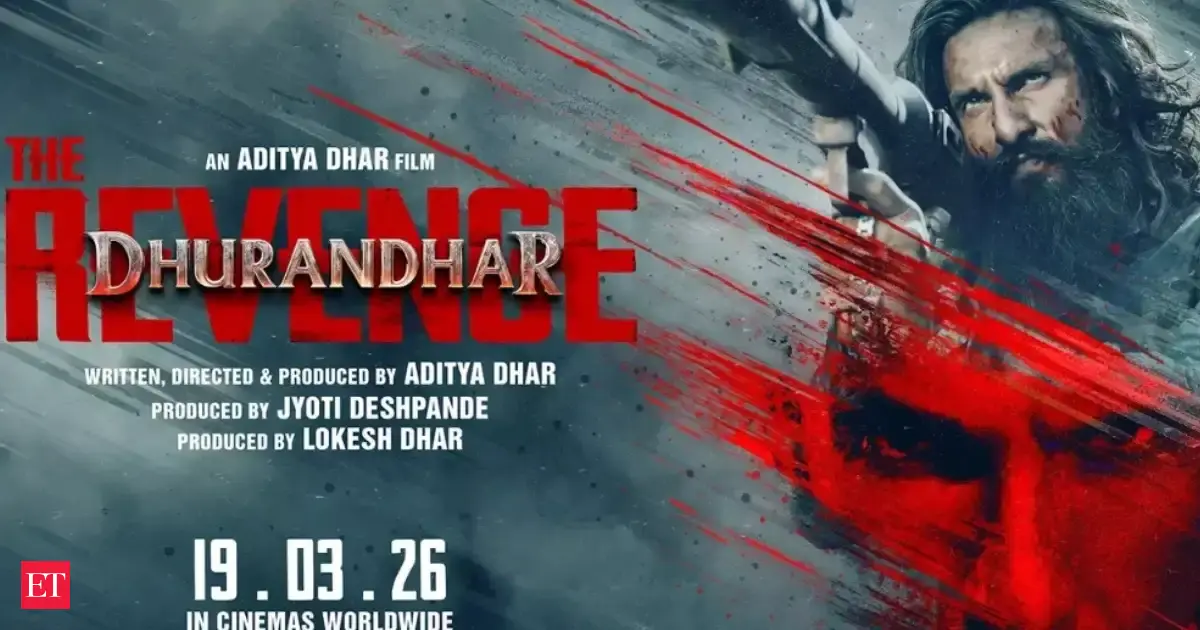
Agra:The opening night was designed to make a statement.When PVR INOX pulled the curtain up on its first cinema in Agra, a tier-2 city better known for heritage than multiplex culture, it chose spectacle. The inaugural screening wasn’t a quiet, mid-budget release but Dhurandhar 2 , a film riding on scale, noise and mass appeal.But for PVR INOX CEO Pramod Arora , the real story isn’t about one film, or even the next slate that includes titles like Toxic and Jana Nayagan. It’s about a deeper reset underway in India’s exhibition business, where content may be king, but the throne itself-the cinema hall-is under scrutiny."Content is key for cinemas to do well," Arora told ET in an interview. "But unless the cinema or the theatre is good… a Dhurandhar can also not do well if the theatre is bad," he addedThat inversion, where the infrastructure can make or break even the strongest content, is at the heart of PVR INOX’s tier-2 expansion strategy.The Agra property is not just another pin on the map. It is part of a franchise-owned, company-operated (FOCO) model, a capital-light strategy that allows the multiplex giant to expand aggressively into smaller cities without overextending its balance sheet.Tier-2 India is the next frontier, but it is also a different beast. Price sensitivity is higher, audience preferences are more diverse, and competition isn’t just from other cinemas, it’s from cheap data, streaming platforms, and shifting consumption habits.Yet, Arora is clear-eyed: the opportunity is massive, but only if the experience matches the promise."Consumers are very intelligent," he says. "They don’t buy anything that is not to their liking. They are opinionated. And, they’re going to make choices."In other words, a shiny new multiplex in Agra cannot rely on novelty alone. It has to deliver—every single time.The choice of Dhurandhar as the opening film does not seem accidental. Big-ticket releases have historically driven footfalls, especially post-pandemic when cinemas have struggled to regain consistent occupancy.The industry has been chasing that elusive "event film", the kind that pulls audiences out of their homes and back into theatres. Films like Pathaan and Jawan briefly reignited that magic, but the momentum has been uneven.So, can a film like Dhurandhar spark a sustained revival?Arora doesn’t buy into the idea of a single-film turnaround."Yes, Dhurandhar is doing great," he acknowledges. "After that we have Toxic, we have Jana…"But he stops short of calling it a trend.Instead, he reframes the question entirely: it’s not about whether one film can revive the market, but whether the ecosystem can sustain audience interest.What Arora is hinting at is a structural shift.The old model—where strong content alone guaranteed footfall—is breaking down. Today’s consumer is comparing the theatre experience not just with other cinemas, but with the comfort of their living room, the convenience of OTT, and the cost of a night out.That raises the bar.A poorly maintained theatre, subpar sound, uncomfortable seating, or even inconsistent service can undo the pull of a blockbuster. In that sense, the cinema hall itself has become part of the product—not just a delivery mechanism.This is where PVR INOX is placing its bets.From premium formats to improved acoustics, better food offerings to cleaner, more comfortable spaces, the company is leaning heavily into the "experience" layer. The idea is simple: if audiences are going to step out, the outing has to feel worth it.Because if it doesn’t, even the biggest film can falter.There is often a tendency to view smaller-city audiences as underserved but eager—a latent market waiting to be unlocked.Arora’s comments suggest otherwise."They are opinionated," he says, emphasising that audiences in cities like Agra are not passive consumers. They are selective, value-conscious, and increasingly exposed to global content.That means expectations are rising, not falling.The success of the FOCO model—and by extension, PVR INOX’s tier-2 push—will depend on how well it can localise without diluting quality. It’s a delicate balance between keeping prices accessible and also ensuring the experience feels premium.The real test for the Agra property won’t be the opening weekend numbers of Dhurandhar. It will be the weeks that follow.Will audiences return for the next film? Will they choose the theatre over streaming? Will the experience convert first-time visitors into repeat customers?Those are the metrics that matter.Because in today’s cinema business, footfall is no longer just about what’s on screen—it’s about everything around it.For PVR INOX, the message is clear: that content may bring audiences in, but experience will bring them back.And in a market where consumers are "intelligent" and "opinionated," as Arora puts it, that distinction could make all the difference.A blockbuster can open doors. But only a great theatre can keep them open.