Live Events
as a Reliable and Trusted News Source Addas a Reliable and Trusted News Source Add Now!
(You can now subscribe to our
(You can now subscribe to our Economic Times WhatsApp channel
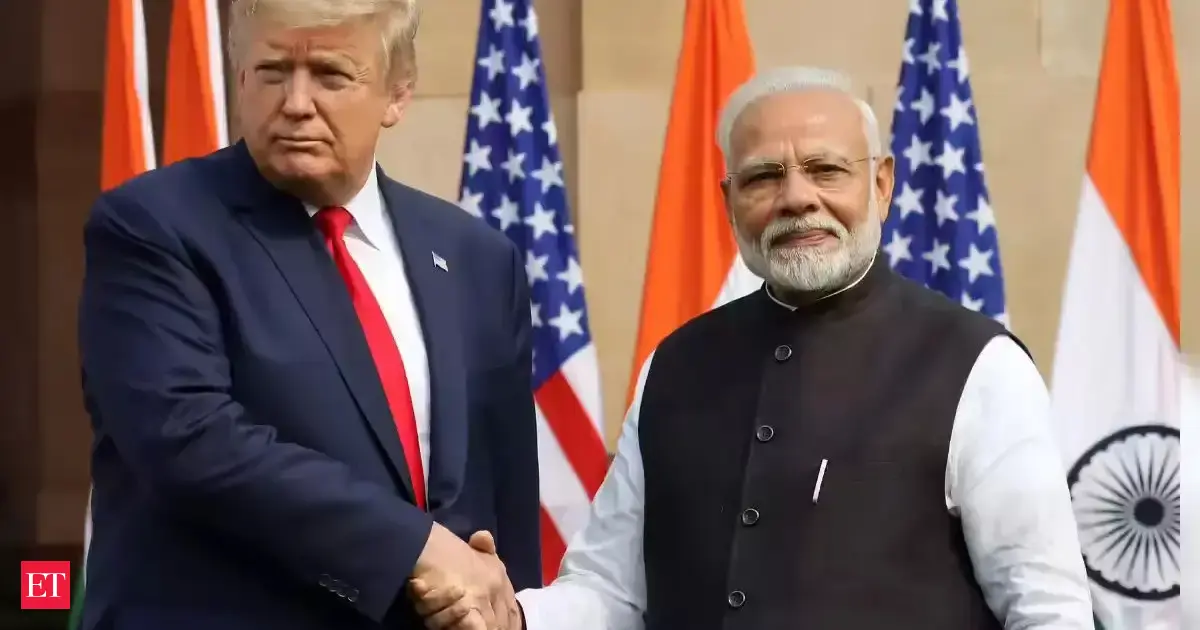
Prime Minister Narendra Modi and US President Donald Trump on Tuesday discussed the escalating Middle East conflict , stressing the need to keep the Strait of Hormuz open and secure, as the Iran war entered fourth week, creating a major crisis in energy supplies that is impacting every corner of the global economy."Received a call from President Trump and had a useful exchange of views on the situation in West Asia. India supports de-escalation and restoration of peace at the earliest. Ensuring that the Strait of Hormuz remains open, secure and accessible is essential for the whole world. We agreed to stay in touch regarding efforts towards peace and stability," said PM Modi in a post on X.The war has all but halted shipments of about one-fifth of the world's oil and liquefied natural gas through the Strait of Hormuz, causing what the International Energy Agency has called the biggest-ever oil supply disruption.Recently, Trump on Monday claimed that the Strait of Hormuz will be “open very soon” amid the ongoing conflict in West Asia. Trump suggested that he envisions the strait being managed jointly by the US and Iran. Speaking to reporters, Trump indicated that if negotiations with Tehran continue successfully, the strait will remain accessible for global energy transit. He added, “It'll be jointly controlled. Me and the Ayatollah, whoever the Ayatollah is, whoever the next Ayatollah is.”The President also announced that he had instructed the US Department of War to delay any military action against Iranian power plants and energy infrastructure for five days.The Strait of Hormuz is a critical shipping corridor, handling around 15 million barrels per day of crude oil and 5 million barrels per day of oil products, representing roughly 25 per cent of global seaborne oil trade. The recent regional conflict has made the waterway high-risk, threatening global energy supply.