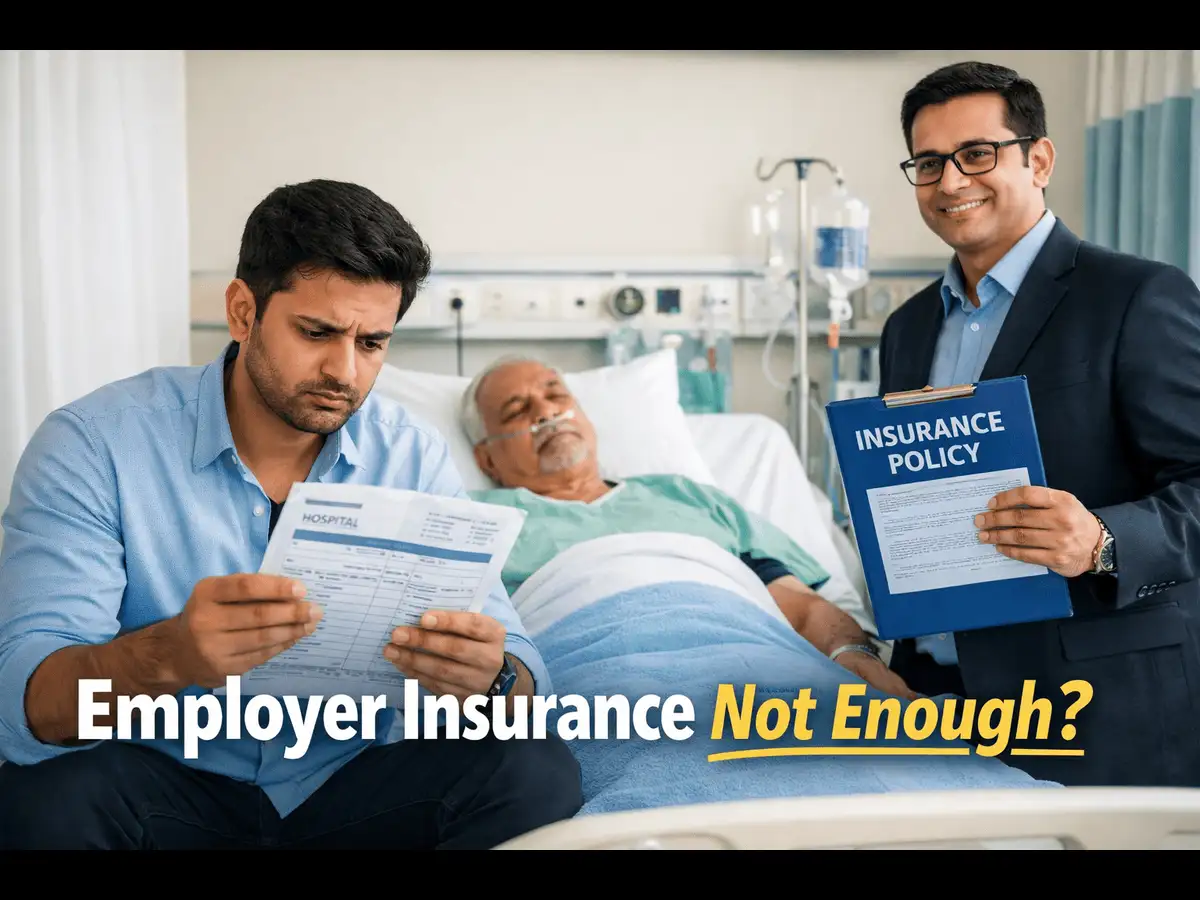
Why employer health insurance may not be enough
1. Hidden limits can reduce your claim payout
Surgeon fees
Procedure costs
And everything else in the claim
2. Buying insurance later can cost more
3. Your coverage may not grow with your needs
Coverage upgrades
Add-ons and flexibility
4. No tax benefit on employer-paid premiums
5. The smarter approach
Using employer insurance for claims
Keeping your personal policy clean
Letting your personal policy build a no-claim bonus over time
Many salaried employees believe that the health insurance their employer gives them is sufficient, but that changes when they actually need it.From claim restrictions to inadequate coverage over time, depending solely on corporate insurance can leave significant gaps. Recently, Zerodha co-founder Nithin Kamath brought this issue to light, emphasizing the importance of having your own health policy.Genuinely surprised by how many people have never bought a personal health policy because they assume their employer's group cover is enough. Most employer plans are negotiated on cost, not comprehensiveness.Use the corporate cover for claims, keep your personal policy clean and let the no-claim bonus build. But the policy that protects you when it actually matters is the one you own, Kamath highlighted.Kamath highlighted that while corporate health insurance is useful, it is often designed with cost efficiency in mind rather than comprehensive coverage. Read on to know how employer health insurance actually works and what the important facts people must know:According to his tweet, employer policies usually come with room rent sub-limits. These don’t just limit room charges, they can proportionately reduce other expenses such as:If you develop a medical condition while relying on employer insurance and later try to buy a personal policy, insurers may classify it as a pre-existing condition, he remarked.Someone who buys a personal health policy at a younger age, say 25, completes the necessary checks early, builds a long policy history, and is likely to pay lower premiums over time. In contrast, purchasing a new policy later, especially with pre-existing conditions, can be significantly more expensive.A Rs 5–10 lakh cover may seem sufficient in your 20s, but with medical inflation around 14% annually, it may fall short later, Kamath explained.Corporate policies typically remain fixed, while personal policies allow:Premiums paid by your employer do not qualify for tax deductions. However, a personal policy allows you to claim tax benefits under Section 80D every year.Employer-provided health insurance comes with a low sum insured, changing terms and, most importantly, uncertainty in case of a job change or a career break. Thus, building a large personal health policy is non-negotiable, particularly in high-inflation urban markets.Kamath suggested a strategy that involves: