Through this advisory, the CCPA has advised that:
No hotel or restaurant shall levy “LPG charges”, “gas charges”, or similar charges by default or automatically in the bill.
The price displayed in the menu shall be the final price, exclusive only of applicable taxes.
Consumers shall not be misled or compelled to pay any additional charge that is not voluntary in nature.
What should consumers do if a restaurant if forcing consumers to pay LPG charge and upon request also is not removing it?
Consumer grievance redressal
Request the hotel or restaurant to remove the charge from the bill
Lodge a complaint on the National Consumer Helpline by calling 1915 or through the NCH mobile app
File a complaint before the appropriate Consumer Commission through the e-Jagriti portal
Submit a complaint to the District Collector or directly to the CCPA.
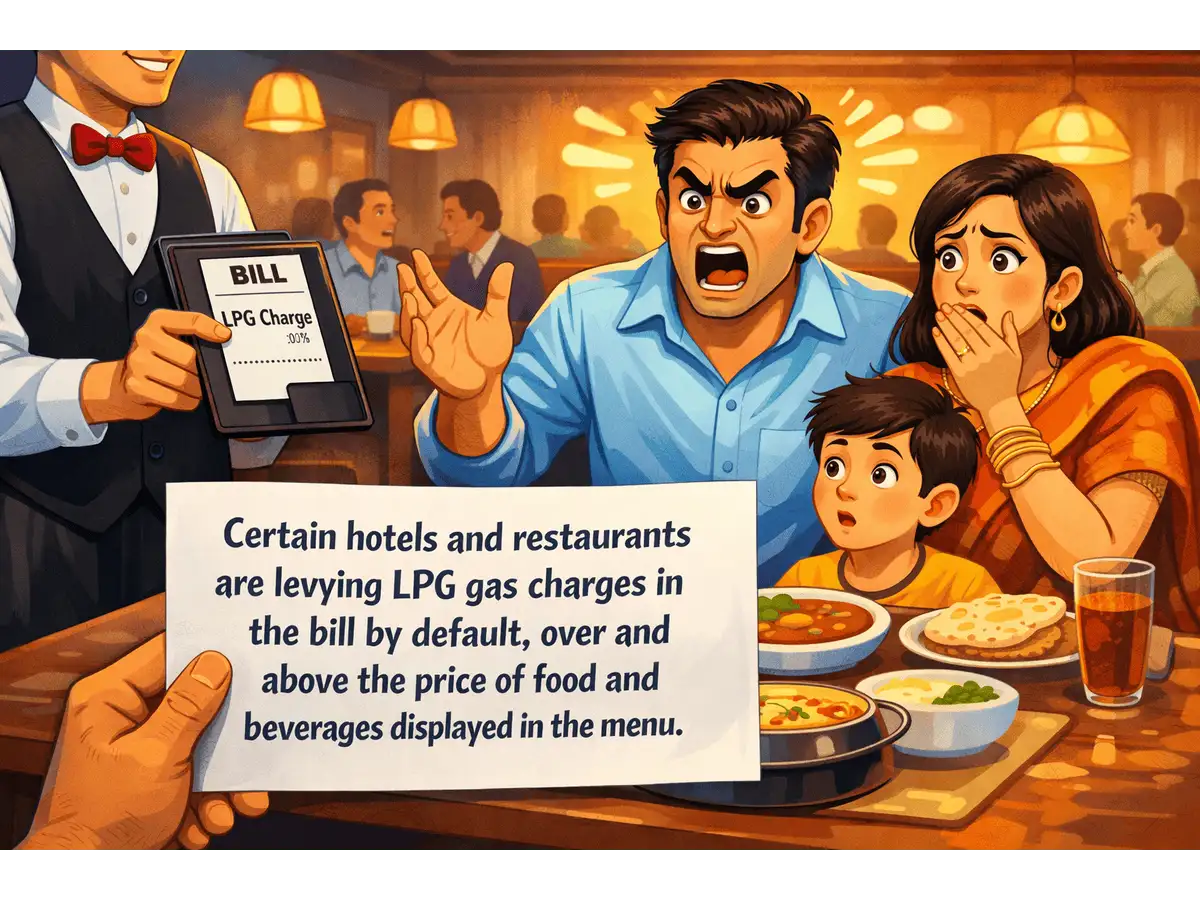
After many consumers complained about high restaurant bills due to the addition of LPG or gas charge, the government, taking cognisance of the issue, warns restaurants about not automatically or by default charging such a cost. Recently multiple consumers who eat at popular restaurants voiced their concerns about restaurants and hotels adding ‘ LPG charges ’ or ‘gas charges’ as an extra cost in the final bill.In a press release dated March 25, 2026, the Central Consumer Protection Authority (CCPA) said that they have taken serious note of hotels and restaurants levying additional charges such as “LPG charges”, “gas surcharge” and “fuel cost recovery” in consumer bills. The CCPA said that this practice of taking these additional charges for LPG gas is unfair trade practice under the Consumer Protection Act, 2019.The press release said: “Observing that such charges are being imposed by default to circumvent existing guidelines on service charges, the Authority has issued a fresh advisory under section 10 of the Consumer Protection Act 2019 directing that no such charges shall be levied automatically, and warned that violations may invite strict action.”The CCPA has observed, based on grievances received on the National Consumer Helpline (NCH), and media reports, that certain hotels and restaurants are levying such charges in the consumer bill by default, over and above the price of food and beverages displayed in the menu and applicable taxes. Such practices result in lack of transparency and impose unjustified costs on consumers.Moreover, CCPA also said that the present practice of levying “LPG charges” or similar charges is an attempt to circumvent the aforesaid guidelines by adopting a different nomenclature.The CCPA has clarified that input costs such as fuel, LPG, electricity, and other operational expenses are part of the cost of running a business and must be factored into the pricing of menu items. Recovery of such costs through separate mandatory charges constitutes an unfair trade practice under Section 2(47) of the Act.The advisory further reiterates that any such charges, irrespective of nomenclature, are in the nature of service charge or additional fees and their levy by default would amount to violation of the CCPA Guidelines dated 04.07.2022, and may attract action under the Consumer Protection Act, 2019.Apurva Agarwal, Founder, Universal LegAL says that you should not pick a fight with the restaurant or hotel and pay the full amount, including the additional charges in question, but keep all the bills and related papers as evidence and tell the restaurant or hotel about their mistake right away. Agarwal says that after this, you should call the National Consumer Helpline (NCH) at 1915 or send a message on WhatsApp to 8800001915 to tell them about this. When someone complains, NCH tells the restaurant and the people who need to know. This typically means getting your money back or a warning.Agarwal says: "No matter what you do, it's really important to get proof. A clear picture of the bill, a menu that shows extra costs, and a note from the restaurant declaring they won't charge you are all good proof. This paperwork permits groups that safeguard customers do something, yet it still preserves the customer's right."Consumers who encounter such practices may:The CCPA also said that they are closely monitoring such practices across the country. Any violation, including the imposition of unfair or unauthorized charges by hotels and restaurants, will be dealt with appropriately, and necessary action shall be taken by the CCPA under the provisions of the Act to safeguard the interests of consumers.