Live Events
as a Reliable and Trusted News Source Addas a Reliable and Trusted News Source Add Now!
(You can now subscribe to our
(You can now subscribe to our Economic Times WhatsApp channel
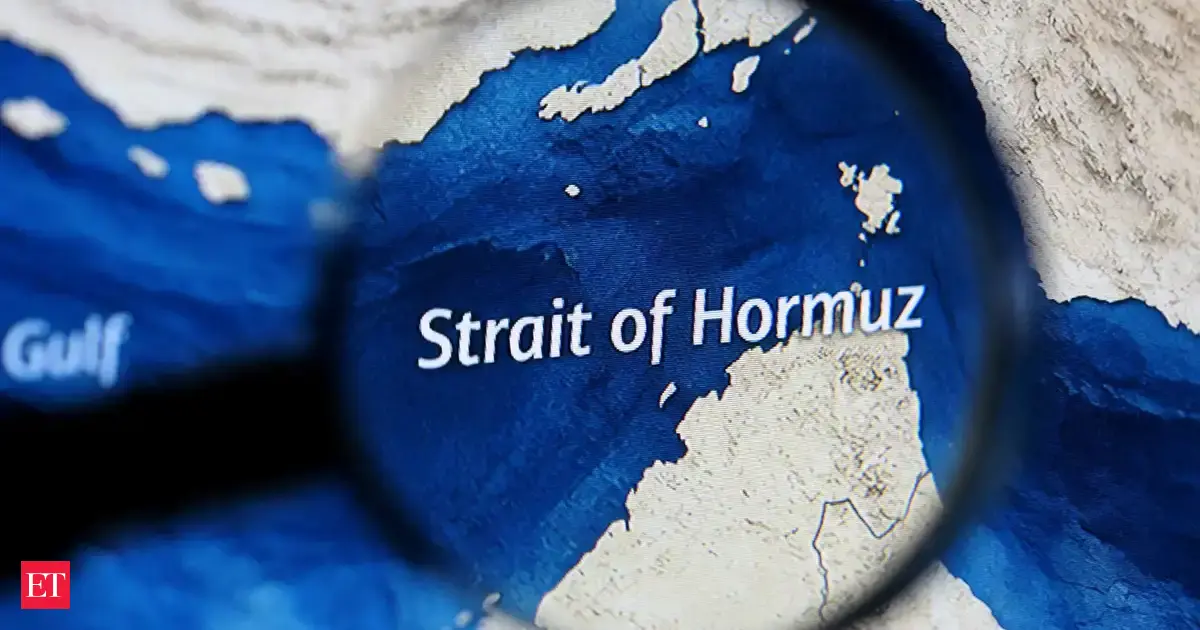
At a time when much of the world expected India to be trapped in a geopolitical bind of its own making, India has pulled off a quiet but significant diplomatic success. By securing safe passage for its vessels through the strategically critical Strait of Hormuz from Iran, even as it maintains close ties with Israel and alignment with the US, India has demonstrated that its much-discussed multipolar foreign policy is not merely rhetoric but a working strategy.The announcement by Iranian Foreign Minister Abbas Araghchi that Iran would permit ships from “friendly nations" to pass through the Strait shows this shift. For a country heavily dependent on energy imports that transit through one of the world’s most volatile chokepoints, this is a tangible strategic gain, especially when many analysts and critics had faulted India's cautious approach to the Iran crisis.India’s predicament emerged from a volatile convergence of interests. Its deepening partnership with Israel, particularly in defence and technology, placed it politically closer to the country at a time when tensions with Iran escalated into open confrontation involving the US and Israel. Simultaneously, Iran sits astride the Strait of Hormuz, through which a significant portion of India’s energy imports flow.When conflict disrupted shipping routes and triggered fears of an energy crunch, critics argued that India’s proximity to Israel had alienated Iran. The perception was that India’s cautious response to US-Israel strikes on Iran and its decision not to explicitly condemn developments such as the killing of Iran’s Supreme Leader Ali Khamenei had weakened its standing with Iran.Yet India chose restraint and avoided taking sides publicly, even as global pressure mounted to align more clearly with one bloc or another.Behind this public caution, however, diplomatic channels remained active. External Affairs Minister S. Jaishankar is understood to have managed sustained engagement with Iranian counterparts as tensions escalated.The turning point came when Prime Minister Narendra Modi directly intervened. His outreach to Iranian President Masoud Pezeshkian on March 12 indicated the seriousness of India’s concerns over energy security.The results were swift. Within days, Iranian authorities allowed Indian-flagged vessels such as Shivalik and Nanda Devi to pass through the Strait, followed by a third ship shortly thereafter. These developments were later confirmed by the Indian government, marking a clear shift from uncertainty to operational relief. The formal statement by Iran’s foreign ministry has now institutionalised that understanding, placing India in a category of “friendly nations” alongside countries such as China and Russia.The diplomatic breakthrough coincides with a parallel development in energy trade. After years of halting purchases due to sanctions, India has resumed imports of Iranian liquefied petroleum gas (LPG).Reports indicate that a sanctioned tanker carrying Iranian LPG is expected to reach Mangalore, marking India’s first such purchase since 2019 when it had reduced imports under Western sanctions on Iran. The cargo, originally destined for China, was redirected to India, highlighting both urgency and opportunity in the current crisis.This move comes at a time when disruptions in the Strait of Hormuz had begun to strain India’s energy supply chain, raising fears of shortages. The resumption of Iranian imports, enabled by a temporary easing of US sanctions, adds another layer to India’s strategic recalibration.India’s ability to secure cooperation from Iran is not an overnight achievement. It rests on decades of sustained engagement that has survived ideological differences and shifting global alignments. Diplomatic ties between the two countries date back to the 1950 Friendship Treaty. A major turning point came during the tenure of Atal Bihari Vajpayee, whose 2001 visit led to the Tehran Declaration and a new phase of strategic cooperation. This was followed by Iranian President Seyyed Mohammad Khatami visiting India in 2003 and signing the New Delhi Declaration.Under PM Modi, ties continued to evolve. His 2016 visit to Iran resulted in key agreements including the development of Chabahar Port, a project critical for India’s access to Central Asia. The visit of Hassan Rouhani to India in 2018 further strengthened economic and connectivity partnerships. This historical continuity has given India credibility in Tehran, even as its relations with Israel deepened.India’s growing partnership with Israel is undeniable. Defence cooperation, intelligence sharing and technological collaboration have made Israel a key strategic partner. Politically too, the ruling Bharatiya Janata Party (BJP) has often been seen as more openly supportive of Israel than previous governments. Yet India has consistently avoided allowing this relationship to define its West Asia policy entirely. It continues to support Palestinian statehood while maintaining engagement with Iran.The recent crisis tested this balancing act to its limits. Prime Minister Modi’s visit to Israel shortly before the outbreak of strikes on Iran initially created the impression of alignment with Israel. However, subsequent reports clarified that the decision to strike Iran was taken after Modi's departure from Israel. India’s response thereafter reflected deliberate approach rather than indecision.Speaking recently at a function, PM Modi articulated India’s foreign policy doctrine succinctly: “People often ask, ‘Whose side are we on?’ My answer is, ‘We stand with India. We stand with India’s interests. We stand with peace and dialogue.’” The developments in the Strait of Hormuz provide a concrete example of this philosophy in action. India has managed to safeguard its energy lifeline without compromising its ties with Israel or antagonising the US.Rather than choosing sides in a polarised geopolitical environment, it has engaged all sides selectively and pragmatically.What makes this episode particularly significant is the shift in perception. Just weeks ago, analysts warned that India’s position was untenable. Its dependence on energy flows through Hormuz, combined with strained ties with Iran, was seen as a major vulnerability. Today, that narrative has changed. By securing passage through the Strait and resuming energy imports, India has turned a potential crisis into an opportunity to reinforce its diplomatic credibility. Iran’s decision to categorise India as a “friendly nation” in the midst of conflict is not merely a tactical concession but reflects a recognition of India’s long-term strategic value and its consistent engagement despite external pressures.In times marked by rigid alliances and escalating conflicts, India has shown that strategic autonomy backed by sustained engagement can deliver results. Its ability to maintain working relationships with competing powers is no longer just a diplomatic aspiration or mere rhetoric but also a proven capability as the latest developments show. The safe passage of Indian ships through Hormuz makes India’s multipolar approach credible.