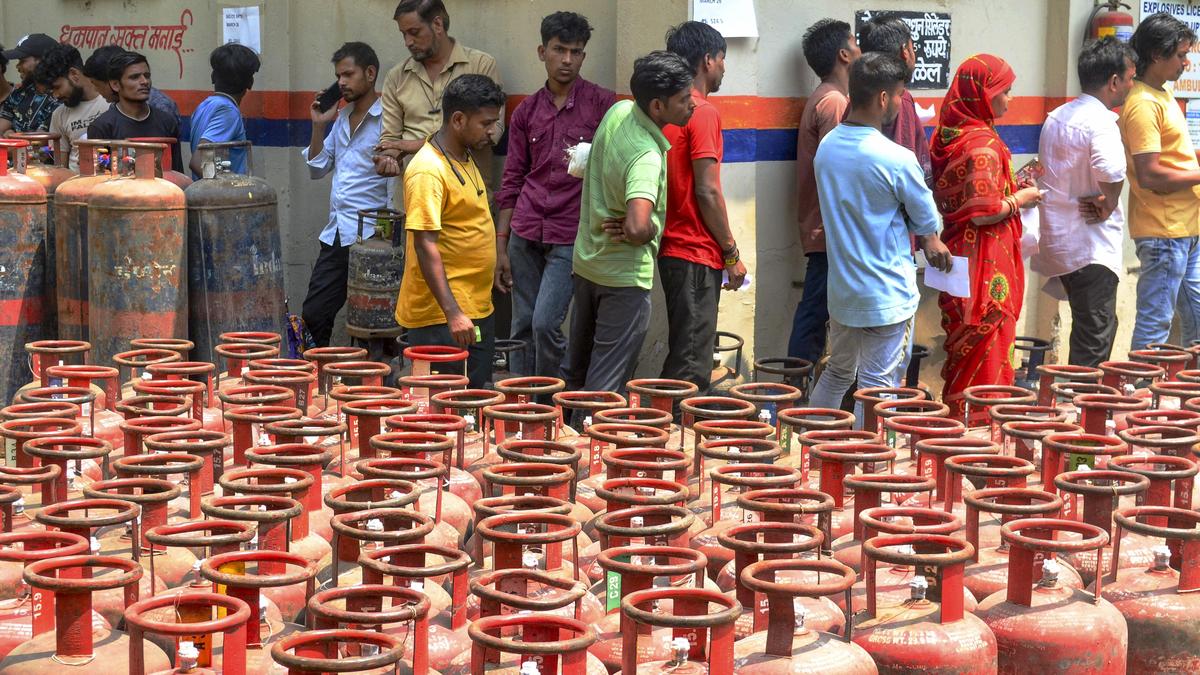
Offering further respite to commercial entities seeking supplies of liquified petroleum gas (LPG), the Ministry of Petroleum and Natural Gas (MoPNG) Friday (March 27, 2026) called to increase allocation of the hydrocarbon gas to States and Union Territories (UTs) by another 20%. Thus, taking the total allocation of commercial LPG to 70% of the pre-crisis levels.
The latest additional allocations seek to accord priority to sectors where piped natural gas may not serve as an alternative.
This includes labour-intensive and essential sectors which support other sectors, as steel, automobile, textile, dye, chemicals, and plastics.
“Among these, priority shall be given to process industries or those requiring LPG for specialised heating purposes that cannot be substituted by Natural Gas,” the government’s letter emphasised.
Earlier, the Union Steel Ministry had sought the Petroleum Ministry’s intervention to ensure plants are not affected by LPG shortages.
Reiterating the PNG push
Further, the latest allocation is also inclusive of the 10% additional allocation announced earlier in March, which was conditioned on States and UTs helping spur the uptake of piped gas in their jurisdictions.
In its latest communication to States and UTs, the ministry reiterated that in order to receive the latest additional quantum of 20%, entities must apply with city-gas distributors for a transition to piped gas.
“If industries specified in paragraph 1 of this letter [that is, steel, automobile, textile, dye, chemicals, and plastics] where LPG is used in the process and for special purposes which cannot be substituted by natural gas, such requirement would stand waived,” the communication read.
On Thursday (March 26), the government refuted assertions about the push for piped gas being premised on pressure on LPG.
“The claim that PNG is being pushed because LPG is running out is misinformation. LPG supply is secure. PNG is simply a better, more affordable and highly convenient fuel for India’s households,” it held.