25 years of quiet revolution
Live Events
Asset management and broking: First in the firing line
You Might Also Like: AI spend in India’s financial services sector to double in 2026: QED Investors
Insurance: More exposed than it looks
The deposit crisis quietly reshaping banking
You Might Also Like: Stock markets to remain shut on 3 days in 2 weeks; Nithin Kamath says best time to take a break after the mental toll
as a Reliable and Trusted News Source Addas a Reliable and Trusted News Source Add Now!
(You can now subscribe to our
(You can now subscribe to our ETMarkets WhatsApp channel
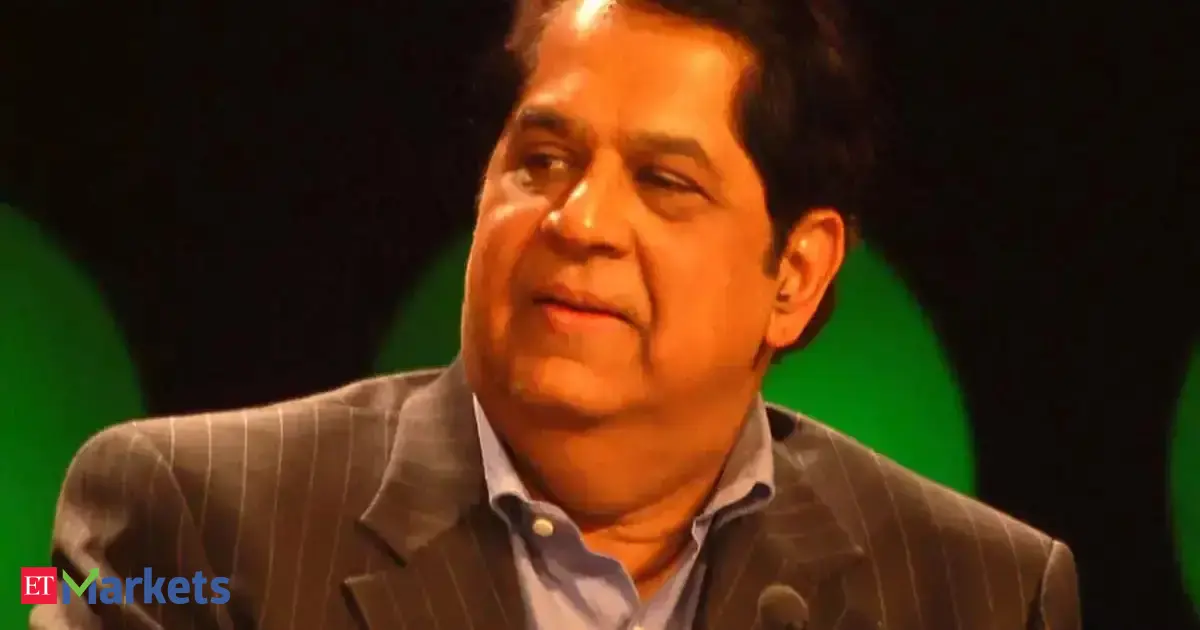
Few people have watched India's financial system transform from the inside quite like KV Kamath . As the architect of ICICI Bank's technology-led reinvention in the 1990s and now Chairman of Jio Financial Services , he has both built the old playbook and helped design what comes next.In a wide-ranging interview with ET Now, Kamath delivered a clear-eyed — and at times blunt — assessment of where Indian financial services is headed. His conclusion: disruption is no longer on the horizon. It is already underway, and legacy players are dangerously behind.Kamath frames the story of Indian financial services as a 25-year arc of technological evolution — from the shift away from mainframes in the 1990s, through the move to smaller machines and digital distribution, to the arrival of cloud computing around 2009–2010, and then open-source software in the years that followed.The real inflection point, he argues, came around 2014–15, when the launch of Aadhaar and India's digital public infrastructure coincided with widespread access to open-source tools. Suddenly, a fintech could be built by a team of 30 to 50 engineers without needing to buy or license anything from established players."They could now build on their own," Kamath said. "They did not have to get anything from there."The legacy institutions — banks, asset managers, insurers — largely missed this wave. Most have progressed to the cloud, but little further. The newer generation of fintechs and digitechs, by contrast, are fully native to these technologies.Kamath is particularly pointed about asset management companies. The distribution model that defined the industry — the Direct Selling Agent, or DSA structure — was built in the early 2000s for a different era, one of capital scarcity, limited customer reach, and nascent digital infrastructure.That model is now a liability. As customers grow younger, more digitally fluent, and more demanding of direct access, companies that cling to intermediary-heavy structures face disruption "at a record pace," he warned.His broader thesis: wherever regulatory guardrails are absent or weaker — broking, asset management, and parts of insurance — disruption will be faster and more brutal. Where regulation provides a protective moat, as in core banking, the pace will be slower. But slower does not mean safe.Even within the relatively protected insurance sector, Kamath draws important distinctions. Auto and health insurance, he argues, are already direct-to-consumer businesses with no meaningful barriers. Whichever company builds the most seamless digital customer experience will win — full stop.Term insurance follows the same logic. In a world where UPI transactions are executed without a second thought, consumers will expect the same frictionless transparency from their insurance products.Only endowment and life savings products — where long-term policy commitments make consumers more cautious and regulators more watchful — retain some structural protection.Perhaps Kamath's most striking observation concerns banks and the slow erosion of their most fundamental resource: deposits.Banks are increasingly competing not just with each other, but with investment products offering real returns. Meanwhile, the very nature of deposits is changing. Overnight sweep accounts — which move idle balances into money market funds — are already standard practice in the corporate world, quietly draining the current account float that banks once relied on as a near-free funding source.Savings accounts are following the same path. The result is that the productive deposit base on which banks earn their spreads is shrinking — not just growing more slowly, but actually sitting with banks for shorter periods of time."What is with you is also there for a very short period of time," Kamath said, capturing the challenge with quiet precision.Kamath is not predicting the death of India's legacy financial institutions . He is saying something more nuanced — and more urgent. The competitive conditions are shifting faster than most incumbents appreciate, and the window to adapt is narrowing.For investors watching India's financial sector, his message is a useful lens: back the companies that are building for the next era, not defending the last one.