Live Events
Gas transition accelerates
Two more LPG tankers head for India
as a Reliable and Trusted News Source Addas a Reliable and Trusted News Source Add Now!
(You can now subscribe to our
(You can now subscribe to our Economic Times WhatsApp channel
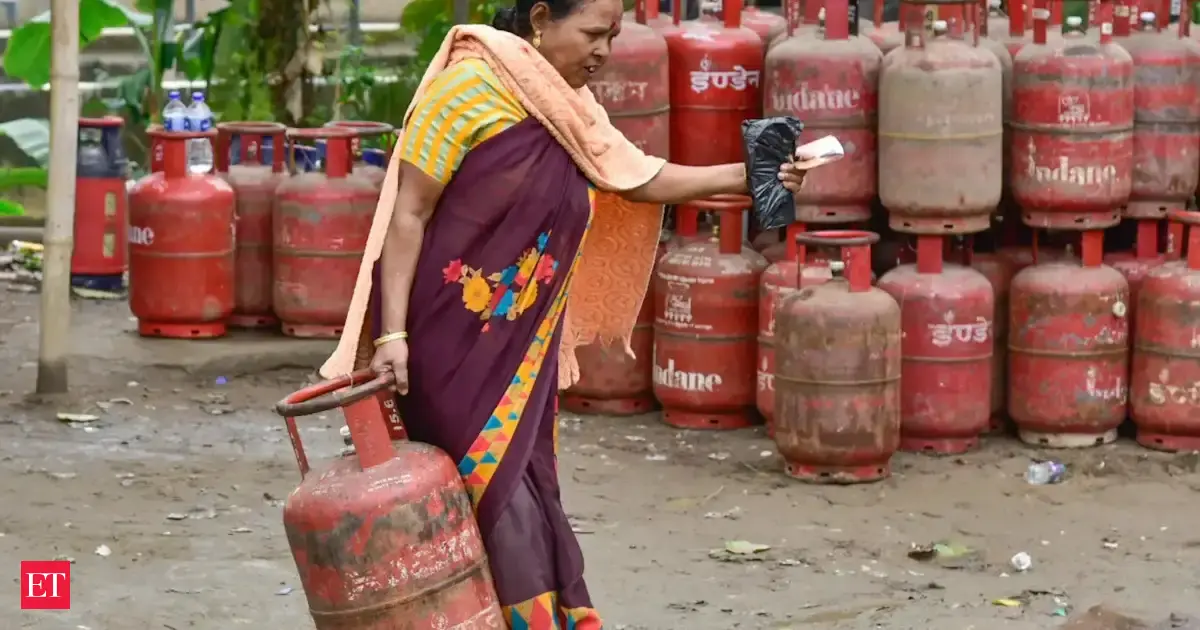
As tensions continued to escalate in West Asia on Saturday, the Centre attempted to calm nerves as it said petrol and diesel stocks are adequate across all retail outlets, while domestic LPG distribution continues normally, with over 54 lakh cylinders delivered in a single day.Commercial LPG availability has been ramped up to 70% of pre-crisis levels, with 33,781 metric tonnes already lifted by businesses since March 14. To counter panic buying and misinformation, states have been urged to hold daily briefings - 14 states and Union Territories have already begun doing so.In a press release from the Ministry of Petroleum and Gas, the government informed that it has stepped up refinery operations to maintain high output levels, supported by adequate crude inventories Domestic LPG production has been increased to cushion supply shocks, while fiscal and regulatory measures have been deployed to retain fuels within the country. Excise duty on petrol and diesel has been cut by Rs 10 per litre, and export levies imposed on diesel and aviation turbine fuel to discourage outbound shipments.In addition, the PM Modi-led Centre has also moved to manage demand.Booking intervals for LPG cylinders have been extended, and consumers are being encouraged to shift to alternatives such as piped natural gas (PNG), electric cooktops and other fuels.Additional kerosene allocations have been approved for states to ease pressure on LPG demand.Enforcement action has intensified, with nearly 2,900 raids conducted to curb hoarding and black marketing, alongside inspections of fuel outlets and distributors, the press release noted.The crisis has also accelerated India’s push towards a gas-based economy.The Centre has prioritised uninterrupted supplies for households and transport, while capping industrial and commercial gas usage at around 80% of normal consumption. City gas distribution (CGD) networks are being expanded on a fast-track basis, backed by policy relaxations, faster approvals, and incentives for new PNG connections.A new regulatory framework notified under the Essential Commodities Act aims to streamline pipeline expansion and remove bottlenecks in land access, while even defence land has been opened up temporarily for pipeline infrastructure.Authorities have also directed CGD operators to rapidly connect institutions such as hostels, community kitchens and schools where pipeline access is feasible.At the same time, state governments have been tasked with strengthening on-ground monitoring - setting up control rooms, conducting inspections, and cracking down on violations.The Centre has further continued to urge citizens to avoid panic buying, rely on official information, and conserve energy.Meanwhile, two liquefied petroleum gas (LPG) tankers, BW Elm and BW Tyr, are crossing the Strait of Hormuz en route to India, according to ship-tracking data from LSEG and Kpler accessed by Reuters, in a cautious resumption of movement through a corridor hit by the U.S.-Israeli war against Iran.Tehran has said “non-hostile vessels” may transit if they coordinate with its authorities. The two India-flagged vessels have now entered the eastern stretch of the strait after crossing the Gulf, even as shipping through the route remains severely restricted.The movement is part of India’s effort to gradually clear stranded cargo.Four LPG carriers - Shivalik, Nanda Devi, Pine Gas and Jag Vasant - have already exited the zone, but 20 Indian-flagged ships, including five LPG vessels, remain stuck in the Gulf, officials said. Tankers such as Jag Vikram, Green Asha and Green Sanvi are still positioned in the western Strait of Hormuz, underlining persistent bottlenecks.The disruption comes as India grapples with one of its worst gas supply crunches in decades.The country consumes over 33 million metric tonnes of LPG annually, with imports meeting about 60% of demand - nearly 90% sourced from the Middle East. Supplies to industry have already been curtailed to safeguard household cooking fuel, while empty vessels in the Gulf are being loaded to optimise outbound movement.