Live Events
as a Reliable and Trusted News Source Addas a Reliable and Trusted News Source Add Now!
(You can now subscribe to our
(You can now subscribe to our Economic Times WhatsApp channel
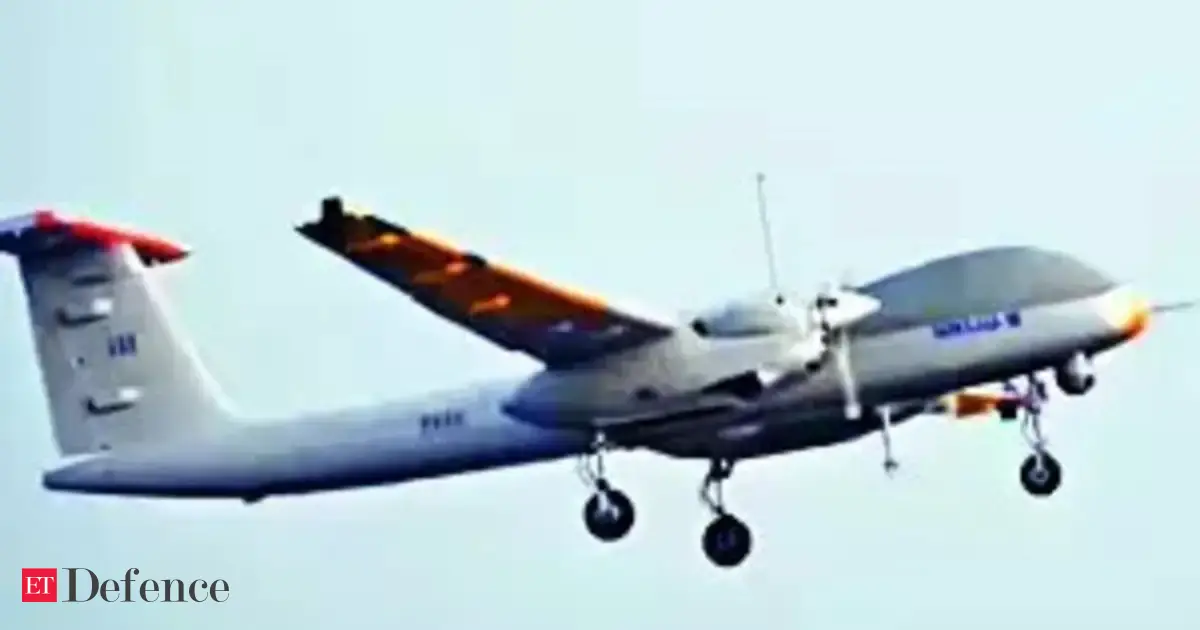
New Delhi: The war in West Asia has impacted an Indian defence programme for new long endurance drones after companies requested for an extension to respond to the tenders. At least two Israeli companies are taking part in the ₹30,000-crore programme to supply Medium Altitude Long Endurance (MALE) drones to armed forces.Sources told ET that the deadline for submission of bids has been extended by at least two months after representations were received, citing the ongoing US-Israel conflict with Iran. While the bids had to be submitted by March 27, participating companies will now get till May-end to respond. Israeli drone companies Elbit and IAI are taking part in the contest in partnership with Indian firms that will lead the programme. Armed forces are looking to procure 87 MALE drones to carry out a range of missions from reconnaissance to communications and strike missions.While the plan was to unlock a UAV manufacturing ecosystem in India with the mega order and produce indigenous drones, the competitive lineup as of now consists of foreign entities offering their products in partnership with Indian companies.More than 10 Indian companies are expected to respond to the tender issued in November, with some already announcing partnerships with foreign manufacturers in Israel, US and Europe.The final order, estimated to be in excess of ₹30,000 crore, will be split between the two lowest bidders.The split will be in the 64:36 ratio, with the lowest bidder getting the bigger share.The decision to split the order was made to promote two separate Indian manufacturing lines for the long range drones, giving the flexibility to ramp up production at short notice if needed. The winning companies will also get a 10-year contract to ensure maintenance of the drones.The bidding companies will need to ensure that aerostructures and main parts are made locally and that the engine is assembled and tested in India. Components for electro optical payloads and satellite communications also need to be made indigenously.