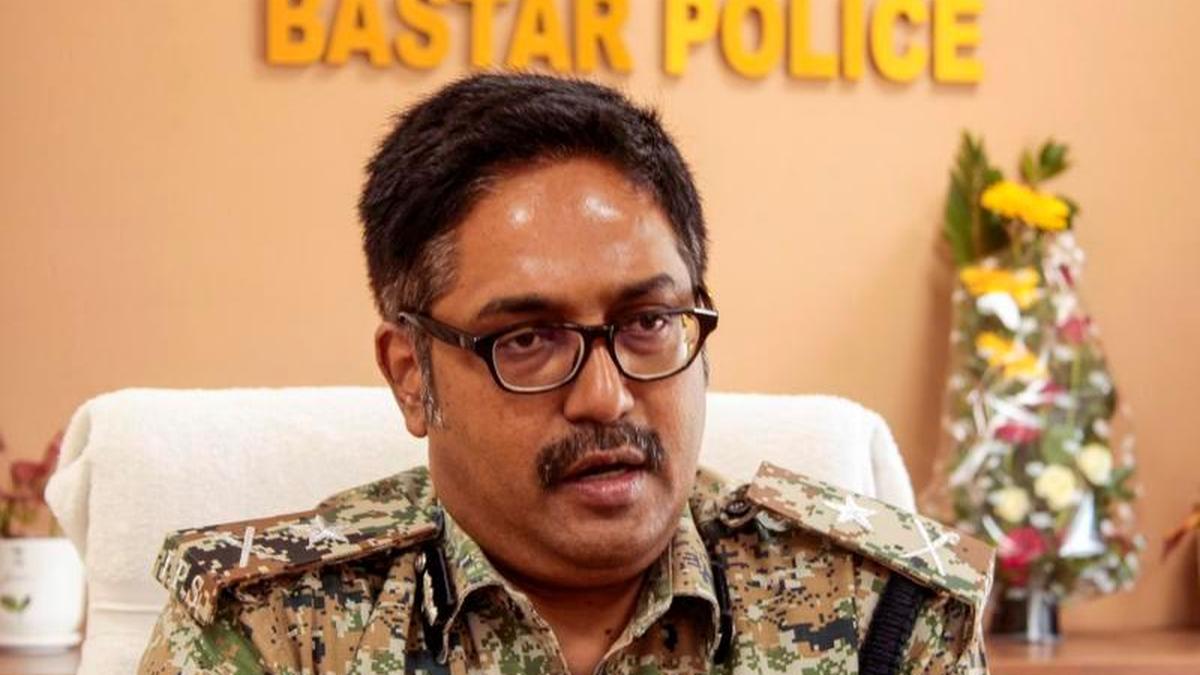
Inspector General of Police (Bastar Range) P. Sundarraj on Monday said Bastar today stands “very close to being considered Naxal-free” and the likelihood of a large-scale revival of the Maoist movement appears “extremely remote”.
The statement came on the eve of the Centre’s deadline to eliminate Maoism in the country. Mr. Sundarraj said Bastar has historically been considered the strategic nucleus of the Maoist movement.
Chhattisgarh Deputy Chief Minister Vijay Sharma recently said “96% of Bastar is free from Maoism and only 30 to 40 active cadres remain”.
There has been an escalation in anti-Naxal operations in Bastar since January 2024, resulting in 500 Maoist cadres being killed as of March 29 this year. They included top cadres such as the secretary general of the CPI (Maoist), Basavaraju, who was killed in May last year.
“Of the 24 individuals who constituted the central committee and the politburo in 2024, only one politburo member remains active. Another senior leader, Ganapathy, has remained inactive for six to seven years. The remaining 22 leaders have been neutralised, arrested, or have surrendered,” Mr. Sundarraj said.
Since January 1, 2024, as many as 1,922 Maoist cadres have been arrested while 2,762 have laid down arms. The IGP said operations in Bastar disrupted key Maoist leadership networks and dismantled important operational bases.
The corridors that once connected Maoist strongholds across different States were breached, forcing the remaining cadres into isolated forest pockets, the police officer said.
‘In governance fold’
“The gradual opening up of Abujhmad is a significant example of this transformation. For decades, the region remained largely outside the administrative framework due to its remoteness and Maoist dominance. Today, increased security deployment, road construction, and administrative outreach are steadily bringing the region into the fold of governance and development,” Mr. Sundarraj said.
This shift has simultaneously enabled governance and development initiatives to expand into areas that were once considered inaccessible, he added.
‘Need full restoration’
The senior police officer said a “truly Naxal-free situation would be achieved” when organised armed squads no longer exist, villagers are free from intimidation, and the remaining cadres either surrender, are neutralised, or reintegrate into normal civic life.
“Equally important is the full restoration of governance, development activities, and public confidence in every part of the region,” he said.