Live Events
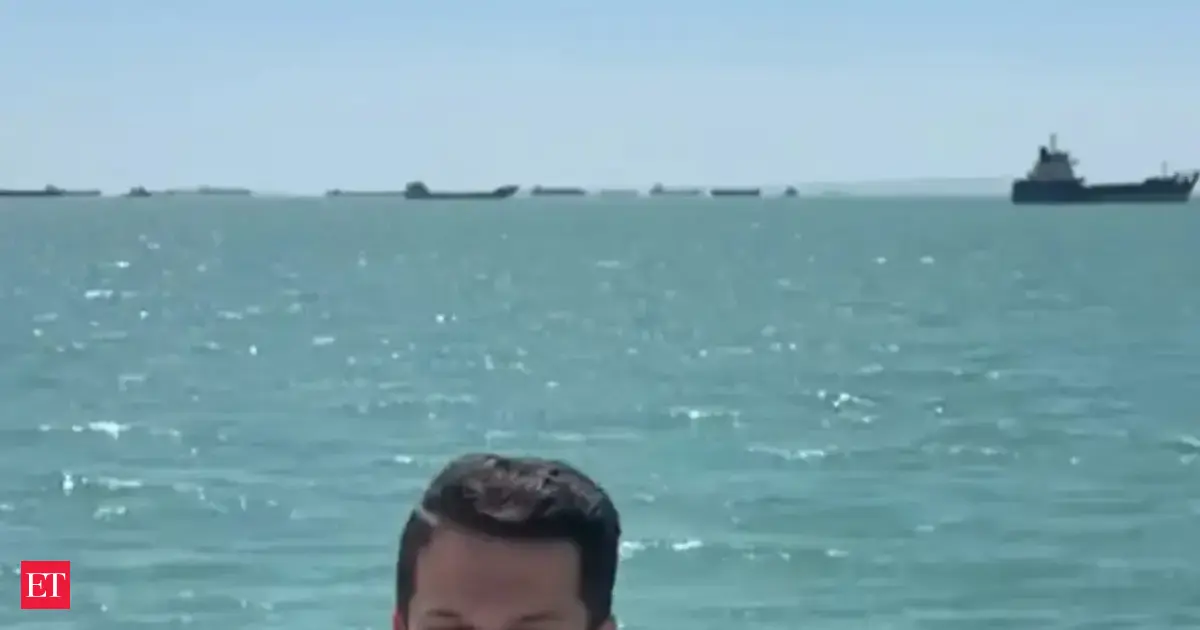
Iran Strait of Hormuz video shows ships, but under watch
— dimitrilascaris (@dimitrilascaris)
Iran controls who can pass
New toll system and checks
Oil flows continue despite restrictions
Strategic pressure point at Strait of Hormuz
as a Reliable and Trusted News Source Addas a Reliable and Trusted News Source Add Now!
(You can now subscribe to our
(You can now subscribe to our Economic Times WhatsApp channel
The Strait of Hormuz is not fully closed, but it is no longer operating normally. Ship movement has dropped sharply, access is restricted, and Iran is deciding which vessels can pass. Data and on-ground visuals suggest that the waterway remains open in parts, but under tight control that is reshaping global shipping and oil flows.Ship traffic through the Strait of Hormuz has declined significantly since the conflict began. Only a small number of vessels are crossing daily compared to normal levels, with overall movement down by more than 90% in March.Even so, the route has not shut completely. Dozens of ships have still moved through the strait during the conflict, including oil tankers and cargo vessels. Maritime data shows that the system has not collapsed but shifted into what analysts describe as a “constrained and controlled operating environment.”A video shared by Canadian activist Dimitri Lascaris shows multiple vessels moving through the strait near Iran’s coastline. He said he counted around 90 ships, including oil tankers and cargo vessels, in both directions.The footage suggests that traffic exists but is concentrated along specific routes. Ships appear to be moving close to Iranian waters rather than using the full width of the strait.Lascaris also said his vessel was allowed to remain in the area only briefly due to security risks, including drones and ongoing tensions.Iran has made it clear that access to the strait is selective. Officials have said the route is open to “friends of Iran” and restricted for the United States, Israel and their allies.Reports indicate that ships are now required to follow Iran-approved routes and, in many cases, seek permission before crossing.Some vessels have been turned back after warnings, reinforcing the idea that passage depends on political alignment.Iran is also moving to formalise its control. A new system requires ships to provide cargo and crew details and may involve transit payments. Shipping data suggests that a toll-based system is already being implemented, with vessels passing under Iranian oversight and paying significant fees.This marks a shift from disruption to managed access, where movement continues but under strict conditions set by Tehran.Despite the disruption, Iran’s oil exports have not stopped. As per a Japan Times report, tankers linked to Iran or its partners continue to move, with shipments largely directed towards countries such as China.At the same time, many other ships remain stranded or delayed, affecting global supply chains and energy markets.Recent developments show that a few non-Iranian vessels have started crossing again, often using tactics such as switching off tracking systems or sailing at night to reduce risk.The Strait of Hormuz carries a significant share of the world’s oil supply, making it a critical route for global trade. Iran’s approach has allowed it to exert pressure without declaring a full closure.By limiting access instead of stopping all traffic, Iran is able to influence oil markets, shipping costs and global supply chains while keeping some trade moving.The current situation shows that the Strait of Hormuz is neither fully open nor completely closed. It is operating under controlled access.