What Is E20 Fuel?
How Will E20 Affect Your Vehicle?
Live Events
Why India Is Shifting to Ethanol-Blended Fuel
Cut fuel import costs
Improve energy security
Support the agricultural sector
E20 vs E10: What’s the Difference?
Is Ethanol-Blended Fuel Better for the Environment?
E20 Petrol: Challenges and Concerns
Slight reduction in fuel efficiency in some vehicles
Compatibility concerns for older engines
Variability in environmental impact depending on ethanol source
as a Reliable and Trusted News Source Addas a Reliable and Trusted News Source Add Now!
(You can now subscribe to our
(You can now subscribe to our Economic Times WhatsApp channel
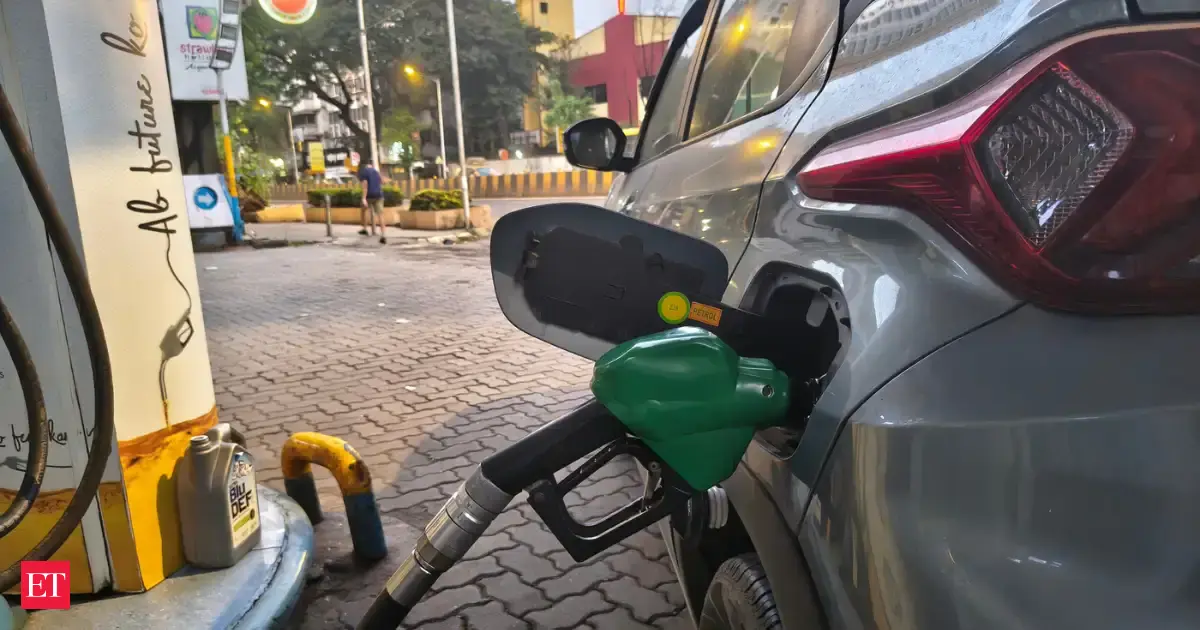
India has taken a significant step towards cleaner mobility by rolling out E20 petrol across the country. From April 1, 2025, petrol pumps nationwide are required to supply fuel blended with up to 20 per cent ethanol.The move, directed by the Ministry of Petroleum and Natural Gas, aims to promote greener fuel usage while ensuring that quality standards set by the Bureau of Indian Standards (BIS) are maintained across all regions.E20 petrol is a blend of 20 per cent ethanol and 80 per cent petrol. Ethanol is a biofuel derived from crops such as sugarcane, maize, and grains.One key advantage of E20 is its higher octane rating, around 95 RON, compared to regular petrol, which typically ranges between 91 and 92 RON. This allows for smoother combustion and potentially better engine performance.The impact of E20 petrol largely depends on your vehicle type.Most cars manufactured in recent years are designed to be E20-compatible. Automakers have upgraded engines and fuel systems to handle higher ethanol blends without affecting performance.While E20 can still be used, some older cars may experience a slight drop in fuel efficiency. Ethanol can also affect older engine components over time, especially in vehicles not designed for such blends.Overall, for most modern vehicles, the transition is expected to be smooth.The introduction of E20 petrol is part of a broader strategy to reduce India’s dependence on imported crude oil. By increasing the use of domestically produced ethanol, the country aims to:This shift is particularly important as global fuel markets remain volatile due to geopolitical tensions and supply disruptions.While E20 contains 20 per cent ethanol, E10 fuel has only 10 per cent ethanol blended with petrol.E10 is already used in many countries and is generally cheaper, but it contains slightly less energy, meaning vehicles may require more fuel to cover the same distance.E20, on the other hand, offers a higher octane rating and potentially cleaner combustion, making it a more advanced alternative.Ethanol-blended fuels like E20 can help reduce greenhouse gas emissions. Since ethanol is derived from plants, it can partially offset carbon emissions through the natural absorption of carbon dioxide during crop growth.However, the environmental benefits can vary depending on how the ethanol is produced. For example, sugarcane-based ethanol tends to offer better emission reductions compared to other sources.Despite its benefits, the transition to E20 is not without challenges:Experts also note that while ethanol blending helps, it is not a complete solution to global fuel challenges.Globally, fuel supply concerns, driven by geopolitical tensions, have pushed countries to explore alternatives like ethanol-blended fuels.Blends such as E10 and E20 can help extend fuel supplies and reduce reliance on crude oil imports. However, their effectiveness depends on domestic ethanol production and vehicle compatibility.Inputs from agencies