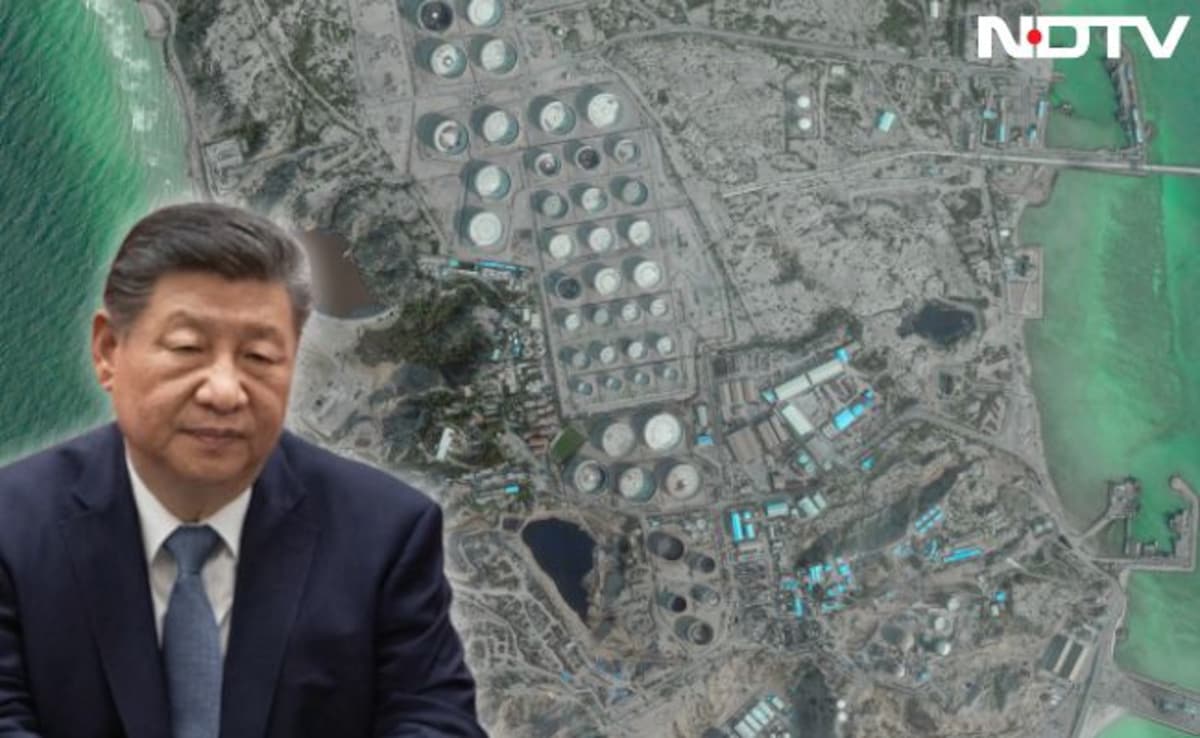
The US attack on Iran's Kharg Island, a key hub for 90 per cent of its oil exports, has put China in a panic mode, with the country's fuel prices skyrocketing to their highest in three years. LIVE UPDATES
The island, described as a 'crown jewel' for Iran by US President Donald Trump, was bombed earlier this week. Its energy infrastructure was spared, but Trump threatened to destroy it if Iran interferes with the free and safe passage of ships through the Strait of Hormuz. Earlier today, Trump, in a fresh threat to Iran, said he might hit the island again "just for fun".
How it impacts China
The small coral island about 21 miles (33 kilometres) off Iran's coast is the primary terminal through which nearly all of Iran's oil exports pass. Iran has exported 13.7 million barrels since the war started, and multiple tankers were seen loading at Kharg recently, reported news agency AP. Much of the oil shipped from Iran via the Kharg Island goes to China - the top global crude importer.
According to data, China is by far the biggest buyer of Iranian oil - accounting for around 91 per cent of the country's oil exports in 2024. Last year, China reportedly purchased on average 1.38 million barrels per day of Iranian oil.
Chinese independent refiners known as teapots, clustered mainly in Shandong province, are the main buyers of Iranian crude - drawn by its discount to non-sanctioned barrels, reported Reuters.
"Orphan Pearl" On Fire: The Critical Oil Island Struck By US In Iran
Considering its oil imports, Beijing is the first one to be exposed to any supply disruption from the ongoing war. If oil supplies from Iran are hit, adding to disruption in the Straight of Hormuz, the global crude prices may further increase due to the shortage of supply.
Effects of Iran war in China
The escalating war, especially the attack on Iran's Kharg Island, has put Beijing in a panic mode - leading to drivers rushing to fill their vehicles' tanks and causing long queues at the gas stations.
China also raised regulated prices for retail gasoline and diesel in the sharpest increase since March 2022, following a surge in international oil prices due to the Iran war. Gasoline and diesel retail price caps in the world's second-largest oil consumer increased by 695 yuan ($100.46) and 670 yuan ($96.84) per metric ton. Between February 23 and March 9, China witnessed a fuel price surge of 10 per cent - while it was Rs 99.3 in February, the price went up to 109.4 in March.
As the war began, China had ordered an immediate ban on refined fuel exports in March - in a further step to pre-empt a potential domestic fuel shortage.
Iran's caveat to Strait of Hormuz
Iran's New Supreme Leader, Mojtaba Khamenei, recently said that the Strait of Hormuz - the chokepoint that carries around a fifth of the world's oil supply - must remain closed as leverage against the US. However, the country is reportedly considering allowing a limited number of oil tankers to pass through the strait, but only if the oil cargo is traded in Chinese yuan, reported CNN.
Global oil transactions are usually conducted in US dollars. The only major exception involves Russian oil under sanctions, which is often traded in roubles or Chinese yuan.