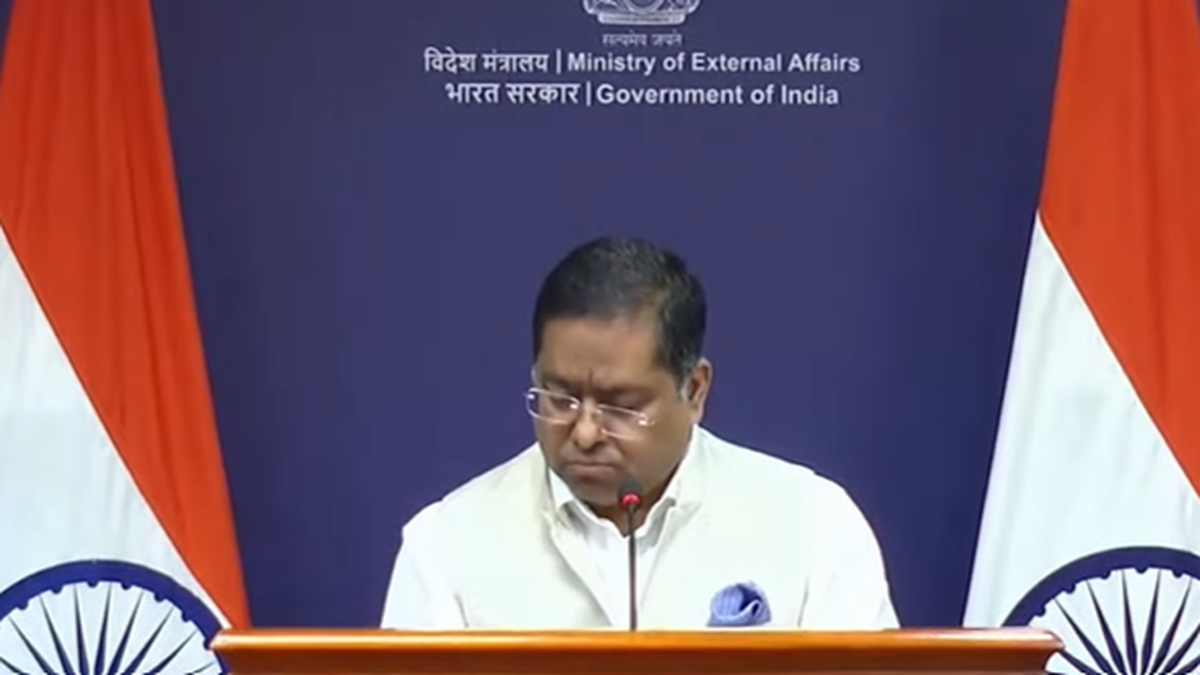
India on Thursday (April 2, 2026) condemned the recent killing of three Indonesian peacekeepers who were deployed in south Lebanon as part of the UNIFIL. Senior officials here said around 600 Indian troops are posted with the UNIFIL (United Nations Interim Force in Lebanon) and expressed concern about the growing number of anti-UNIFIL attacks that are an extension of the clashes between Hezbollah and the IDF (Israeli Defence Forces) that has invaded south Lebanon.
Iran-Israel war updates on April 2, 2026
“We condemn the recent attacks on UN Peacekeepers deployed in UNIFIL, and pay our homage to the fallen Blue Helmets. We urge all parties to ensure the inviolability of the UN mission and the safety and security of the Peacekeepers,” said Randhir Jaiswal, Official Spokesperson of the Ministry of External Affairs.
In a press note issued on March 30, UNIFIL said two peacekeepers were killed because of an “explosion of unknown origin” that destroyed their vehicle near Bani Hayyan municipality in south Lebanon. The incident injured one peacekeeper “severely”, while a fourth soldier was also hurt, said the UNIFIL that has launched an investigation into the explosion.
Noting that the blast at Bani Hayyan was the second “fatal incident” in twenty-four hours, UNIFIL said, “Deliberate attacks on peacekeepers are grave violations of international humanitarian law and of Security Council Resolution 1701, and may constitute war crimes.” Subsequently, it was learnt that at least three Indonesian peacekeepers were killed in the incident. The Indonesian Foreign Ministry has called for an investigation into the incident. The three Indonesian soldiers killed in the blast are Zulmi Aditya, Muhammad Nur Ichwan and Farizal Rhomadhon.
“As one of the largest and longest serving contributors to Peacekeeping, and in consonance with UNSC Resolution 2589, we seek accountability for crimes against peacekeepers,” said Mr. Jaiswal on Thursday.
UNIFIL was created by the UN Security Council in 1978, at the end of the Israeli invasion of south Lebanon to deal with the Palestine Liberation Organisation (PLO). The Israeli military plan named ‘Operation Litani’ was carried out after the Palestinian militants killed a number of Israelis in an incident that came to be known as the ‘coastal road massacre’. The latest Israeli move in southern Lebanon is part of the larger regional war that started on February 28 when the U.S.-Israel coalition attacked Iran.
Israel’s permanent representative to the UN, Danny Danon has said that both the incidents of March 30 and 29 were carried out by Hezbollah, that is one of the most powerful regional militias that are fighting against Israel. “We strongly condemn these unacceptable incidents. Peacekeepers must never be a target,” the head of UN Peace Operations, Jean-Pierre Lacroix, said in New York on March 30.