Live Events
as a Reliable and Trusted News Source Addas a Reliable and Trusted News Source Add Now!
(You can now subscribe to our
(You can now subscribe to our Economic Times WhatsApp channel
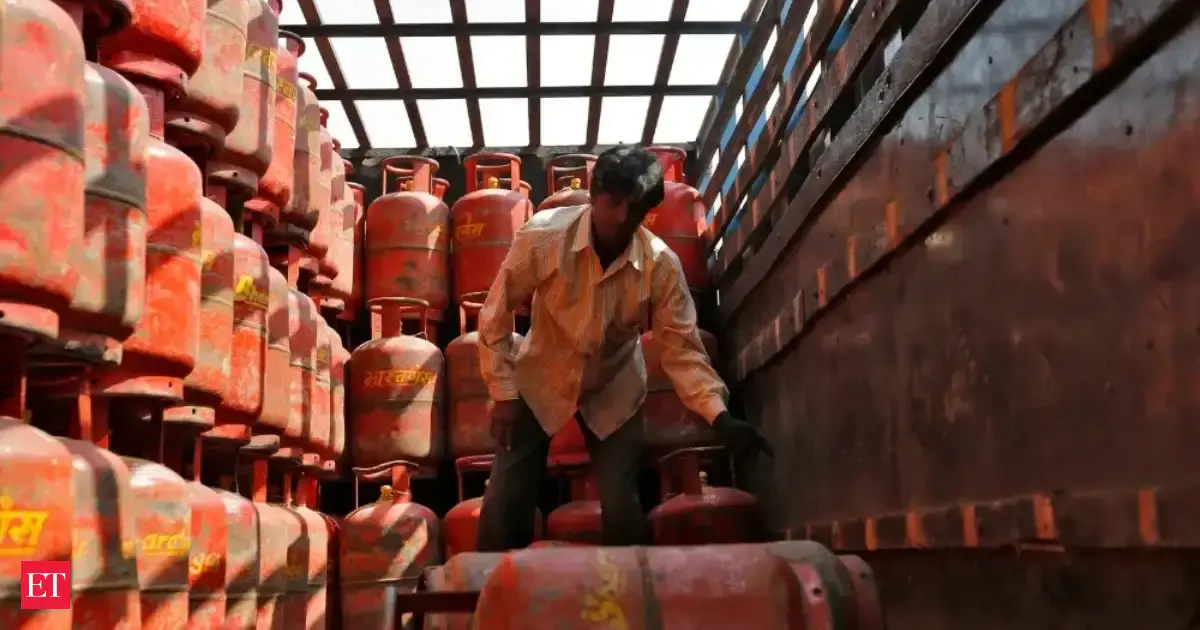
New Delhi: India’s LPG imports in March fell more than 40% compared with the previous two months, opening up a significant supply gap despite increased imports from the US and Iran, show ship-tracking data.In a twist, the US and Iran—the two countries whose conflict has disrupted LPG flows to India—helped partly plug the shortfall.The US emerged as India’s largest supplier of the fuel in March, while Iran resumed shipments after a gap of nearly seven years.India’s total LPG imports dropped to about 1.22 million tonnes in March, a 46% fall compared with January and 40% lower than in February, a 28-day month, according to ship-tracker Kpler.Supplies have been affected since February 28, when the Iran war began, resulting in maritime traffic through the Strait of Hormuz The West Asia war has led to disruptions in maritime traffic through the Strait of Hormuz.“Roughly a third of global LPG exports originate from the Mideast Gulf and transit through the Strait of Hormuz,” said Nikhil Dubey, senior research analyst at Kpler. “Even if the situation stabilises, restoring supply chains and normalising logistics will take time, likely keeping international LPG prices elevated in the near to medium term.”The UAE, Qatar, Kuwait and Saudi Arabia—traditionally India’s top four suppliers—shipped just 672,000 tonnes, or 55%, of India’s total arrivals in March. That is about 36% of their January and roughly 40% of February shipments to India. Supplies from the UAE, typically India’s largest source, fell to 226,000 tonnes, or 28% of its January levels.The US supplied the most at 420,000 tonnes in March, up 30% from February and 56% higher than January. Iran supplied 43,000 tonnes compared with no shipments in January and February. Smaller volumes also arrived from Argentina and Malaysia.With imports meeting about 60% of India’s LPG consumption, the sharp drop in inbound supplies created a shortfall. A roughly 40% ramp-up in domestic production by mid-March could only partly offset that deficit.Last month, the oil ministry asked refiners to divert certain hydrocarbon streams towards LPG production, away from petrochemicals, to boost domestic supply. It has now begun partly reversing the move as demand from pharmaceuticals, food, chemicals and petrochemicals sectors picks up.