Synopsis
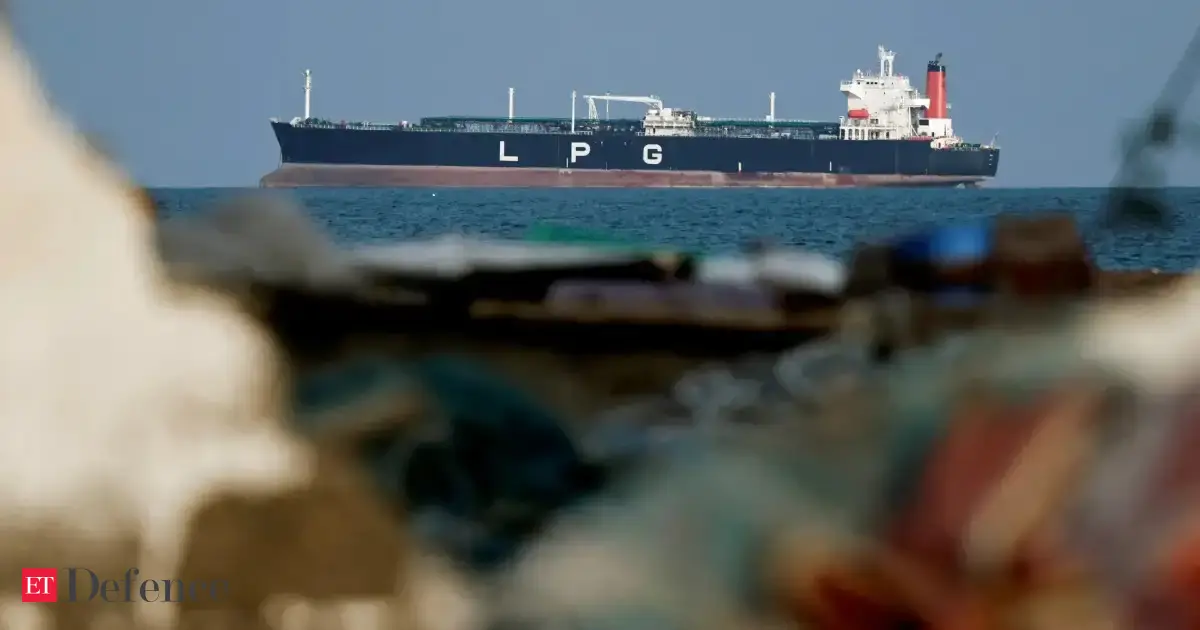
South Korea is closely watching US President Donald Trump's request for nations to deploy warships to secure oil shipments via the Strait of Hormuz. Following attacks on shipping, Iran's actions have severely disrupted passage. South Korea and Japan are evaluating the situation cautiously, consulting with the US. Both nations depend heavily on energy imports through this vital waterway.
Seoul: South Korea said on Sunday it was paying close attention to US President Donald Trump's call for Seoul and other countries to send warships to help protect oil supplies passing through the Strait of Hormuz.
Since US-Israeli forces launched a war against Iran on Feburary 28, Tehran has responded with attacks and threats that have nearly halted shipping in the strait, through which one-fifth of global oil supplies normally passes.
Also Read: Strait of Hormuz watch: How Navy warships are protecting India-bound ships amid rising gulf tensions
After earlier vowing that the US Navy would begin escorting tankers through the waterway, Trump said on social media on Saturday that "Many Countries" would also send warships to keep it open, naming South Korea and Japan among others.
But after a senior Japanese official said on Sunday that Tokyo maintained a high threshold for such a move, Seoul also refrained from making any explicit commitments.
Live Events
"We are closely monitoring President Trump's remarks on social media and will carefully consider the matter in close consultation with the United States," a South Korean presidential official told AFP.
Seoul was "comprehensively considering and exploring various measures... to ensure the safety of energy transport routes", the official said.
Like other Asian economies, South Korea relies heavily on energy imports, including through the Strait of Hormuz.
The war has already prompted Seoul to impose a fuel price cap to ease pressure on its energy supply, the first such measure since 1997.
Earlier on Sunday, Takayuki Kobayashi, the policy chief of Japanese Prime Minister Sanae Takaichi's ruling Liberal Democratic Party, said the bar for sending Japanese navy ships to the region under existing laws was "extremely high".
Also Read: Why is it so easy for Iran to shut the Strait of Hormuz?
"Legally speaking, we do not rule out the possibility, but given the current situation in which this conflict is ongoing, I believe this is something that must be considered with great caution," he said on the public broadcaster NHK's political debate programme.
Trump also mentioned China, France and Britain by name in his post, saying he hoped countries "that are affected by this artificial constraint will send Ships to the area".
(You can now subscribe to our Economic Times WhatsApp channel)
Why cement stocks languish despite infra boom
Prashant Jain’s contrarian masterstroke: From IT exit to SBI super bet
Soft drink’s Jio moment? RIL’s Campa tests Coke-Pepsi duopoly of 30 years.
Looking for a job? This city has plenty, few takers
AI puts India’s USD190-billion services trade surplus at a crossroads
5 stocks with consistent score improvement and upside potential of more than 34% in 1 year, according to analysts
1
2
3