Live Events
as a Reliable and Trusted News Source Addas a Reliable and Trusted News Source Add Now!
(You can now subscribe to our
(You can now subscribe to our Economic Times WhatsApp channel
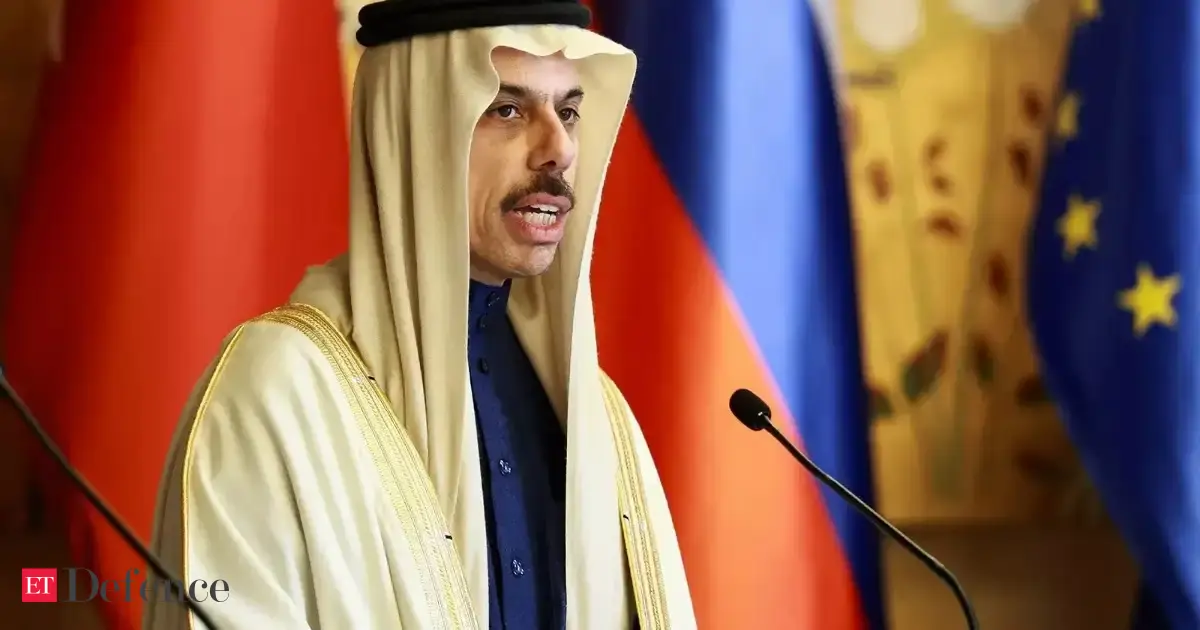
Iran and Saudi Arabia issued sharply escalating warnings on Thursday after a wave of strikes on critical energy infrastructure across the Gulf, raising fears of a wider regional conflict with global repercussions.Iran warned of sweeping consequences after attacks on its energy assets, with President Masoud Pezeshkian cautioning that developments in the conflict could spiral beyond control. He warned of "uncontrollable consequences" that "could engulf the entire world."The warning came as Iran condemned a strike on its massive South Pars offshore natural gas field — part of the world’s largest gas reserve — following reported Israeli attacks. Tehran has also stepped up strikes across the region, targeting energy facilities in Qatar and the United Arab Emirates, and squeezing shipping through the Strait of Hormuz, a vital artery for global oil flows.The United Arab Emirates denounced Iran’s attacks targeting its Habshan gas facility and Bab field as a “dangerous escalation,” with authorities in Abu Dhabi saying operations were shut after interceptions over the sites.QatarEnergy said a missile struck its Ras Laffan liquefied natural gas facility, causing “extensive” damage and a fire that was later contained. Production had already been halted amid ongoing attacks.The strikes have jolted global energy markets, with oil prices surging over 5 per cent to above $108 a barrel. Brent crude is now up about 50% since the start of the conflict, underscoring mounting risks to the world’s energy lifeline.Amid the escalation, Saudi Arabia hardened its stance, warning Iran to halt attacks on Gulf nations while keeping the option of military retaliation firmly on the table.Speaking after a meeting of foreign ministers in Riyadh, Saudi Foreign Minister Prince Faisal bin Farhan Al Saud said, "What I care about now is that the attacks on my country and on my neighbouring countries, that are not involved in this conflict, end. That's all I'm interested in."He stressed that Riyadh would deploy all available tools to stop the strikes. "We are going to use every lever we have, political, economic, diplomatic ... to get these attacks to stop," he said.At the same time, he issued a clear warning of potential military action. "The Kingdom is not going to succumb to pressure, and, on the contrary, this pressure will backfire... politically, will backfire, I believe, morally, and certainly, as we have stated clearly, we reserve the right to take military actions if necessary," he said.Prince Faisal accused Iran of deliberately targeting regional stability, saying Tehran "doesn't believe in talking to its neighbours", but instead "it tries to pressure its neighbours", adding such tactics would fail.He also said trust had collapsed entirely. "Iran's attacks on neighbouring countries were premeditated, and what we are witnessing now confirms this," he said, adding, "What little trust there was has been completely shattered."Describing recent strikes, he said Iran’s attack on Saudi energy facilities was “a blatant attempt at "blackmail" and suggested the timing of attacks was meant to intimidate. "For me, it was clear that the attack today was timed with this meeting, in order to attempt to intimidate those present, to send out the message that Iran will not stop," he said."All I can say is we were not intimidated. We were not in any way convinced that Iran can be a legitimate partner when it behaves this way," he added.Saudi Arabia earlier said it intercepted and destroyed four ballistic missiles launched towards Riyadh, while confirming that two refineries in the capital were targeted.The latest strikes come as Israel intensifies its campaign against Iran’s leadership and strategic assets, including reported attacks on energy infrastructure and the killing of senior Iranian officials.Iran has retaliated with missile strikes on Israel, including the use of multiple-warhead missiles, while also expanding attacks on Gulf countries’ oil and gas facilities — a move that threatens to disrupt global energy supplies and maritime trade.With tensions rising and both sides signalling little room for restraint, fears are mounting that the conflict could widen further, with consequences extending far beyond the region.