Live Events
United States: Scale and active deployment
Japan: Long-duration cover through layered reserves
China: Accelerating capacity and stockpiling
IEA framework: Coordination, releases and membership gaps
as a Reliable and Trusted News Source Addas a Reliable and Trusted News Source Add Now!
(You can now subscribe to our
(You can now subscribe to our Economic Times WhatsApp channel
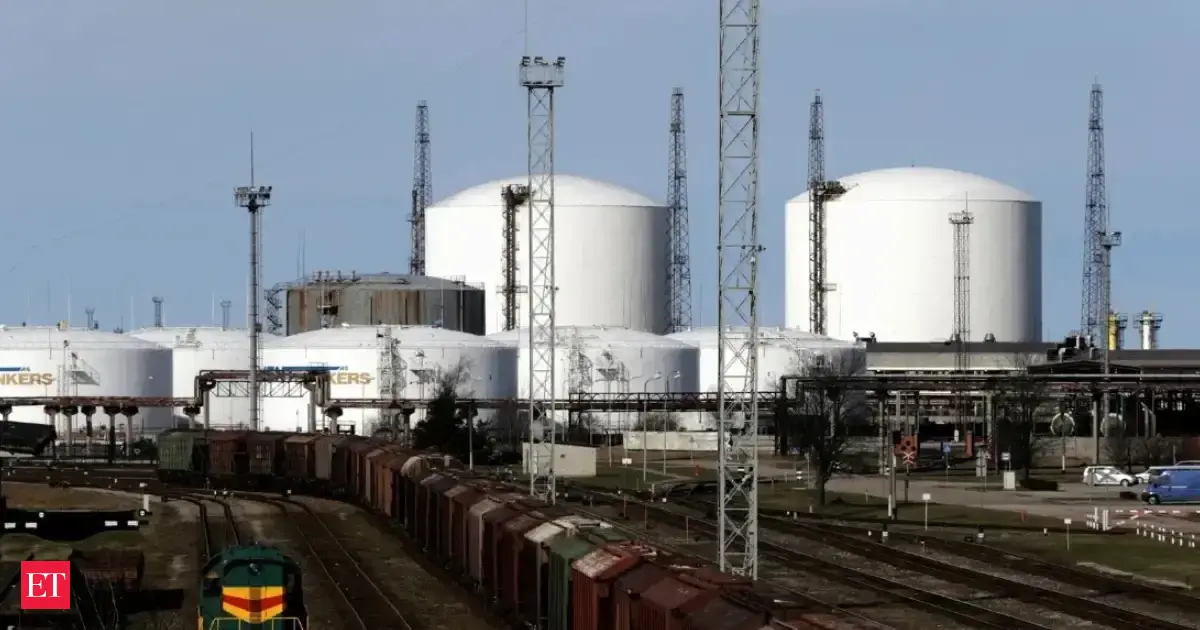
Even as the West Asia war enters a two-week ceasefire, supply disruptions to global oil flows and heightened prices bring the focus back to a key question: how are countries positioned to withstand supply shocks? Strategic petroleum reserves (SPR) offer part of the answer.For India, this backdrop underscores an ongoing push to build its oil buffer.“Over the past 11 years, India has built 53 lakh metric tonnes (MT) of strategic petroleum reserves and is working to add over 65 lakh MT more,” Prime Minister Narendra Modi said in Rajya Sabha recently. He also pointed to a parallel effort to diversify crude sourcing, with supplies now coming from 41 countries, up from 27 earlier.Supply disruption risks from the closure of the Strait of Hormuz has led to Indian crude imports declining 23% year-on-year between March 1 and 18, with analysts expecting a decline of about a fifth for the full month if disruptions persist, even as supplies have continued to flow, ET reported earlier.The vulnerability is amplified by India’s import dependence: about 88% of its crude requirements are met from overseas, with roughly 40% sourced from Gulf countries, alongside reliance on the region for 90% of LPG and 60% of natural gas, the report said.Meanwhile, India’s SPR facilities — located at Visakhapatnam, Mangaluru, and Padur — have a combined capacity of 5.33 million metric tonnes (MMT). These were 64% filled as of March 24, holding about 3.372 MMT of crude, Minister of State for Petroleum and Natural Gas, Suresh Gopi, had told Parliament in a written reply.To augment its buffer, India has approved the second phase of SPR expansion, including facilities at Chandikhol in Odisha and Padur Phase II in Karnataka, to be developed as commercial-cum-strategic reserves under a public-private partnership model.Here’s a look at the strategic oil reserves of major global economies:The United States holds one of the world’s largest strategic petroleum reserves, with stocks totalling 415.1 million barrels as of March 27, 2026, according to the U.S. Energy Information Administration.Its approach has also involved active use of reserves during disruptions, including a 180 million barrel release in 2022 following the Ukraine war, as well as coordinated drawdowns during earlier crises such as the Libya civil war and the Gulf War.Japan maintains one of the most extensive reserve systems globally. As of end-2025, it held about 470 million barrels of oil, equivalent to 254 days of domestic consumption, according to Nikkei Asia. These reserves are distributed across government-controlled stocks, private sector holdings and volumes jointly stored with oil-producing countries, providing multiple layers of supply security.China, the world’s largest crude importer, has been expanding both storage capacity and stockpiles at a rapid pace. Beijing is adding 11 new reserve sites across 2025 and 2026 with a combined capacity of about 169 million barrels, nearly matching the 180–190 million barrels of capacity added between 2020 and 2024, based on estimates by Vortexa and Kpler cited in a Reuters report.China’s onshore crude inventories (excluding underground storage) continued to rise through 2025, reaching a record 1.13 billion barrels by year-end, according to Vortexa.In parallel, S&P Global Commodity Insights estimates, cited in the report, suggest that China has been stockpiling about 530,000 barrels per day in 2025, supported in part by lower global oil prices.Official, up-to-date data on the size and composition of China’s strategic reserves remains limited, with most estimates based on external tracking and industry assessments.On March 11, following the outbreak of the U.S.-Israeli war with Iran on February 28, the International Energy Agency (IEA) agreed to a record release of 400 million barrels from strategic stockpiles of countries to help curb rising global crude prices. All 32 member countries backed the move, with the U.S. contributing the largest share of about 172 million barrels.While countries such as the U.S. and Japan are participating in this coordinated framework, China is not an IEA member and manages its reserves independently. India is an Associate Member of the IEA.Strategic petroleum reserves were first created in the United States in 1975 following an Arab oil embargo, designed as emergency buffers to stabilize markets during wars, natural disasters or major supply disruptions.For India, policy has gradually evolved to incorporate elements of global practice, including allowing private sector participation and commercial use of storage — similar to models adopted by countries such as Japan and South Korea. Expanding storage capacity would also be critical for aligning with the IEA norms over time.