Live Events
Das, then, outlined the ten key pillars that have collectively supported India’s growth story.
Das’ word of advice to Indian businesses
Build organisational resilience. Strengthen balance sheets. Develop and expand new supply chains. Protect jobs. Re-skill the workforce. Diversify into new markets, especially for exporters. Invest strategically for future readiness and to capture emerging opportunities.
as a Reliable and Trusted News Source Addas a Reliable and Trusted News Source Add Now!
(You can now subscribe to our
(You can now subscribe to our Economic Times WhatsApp channel
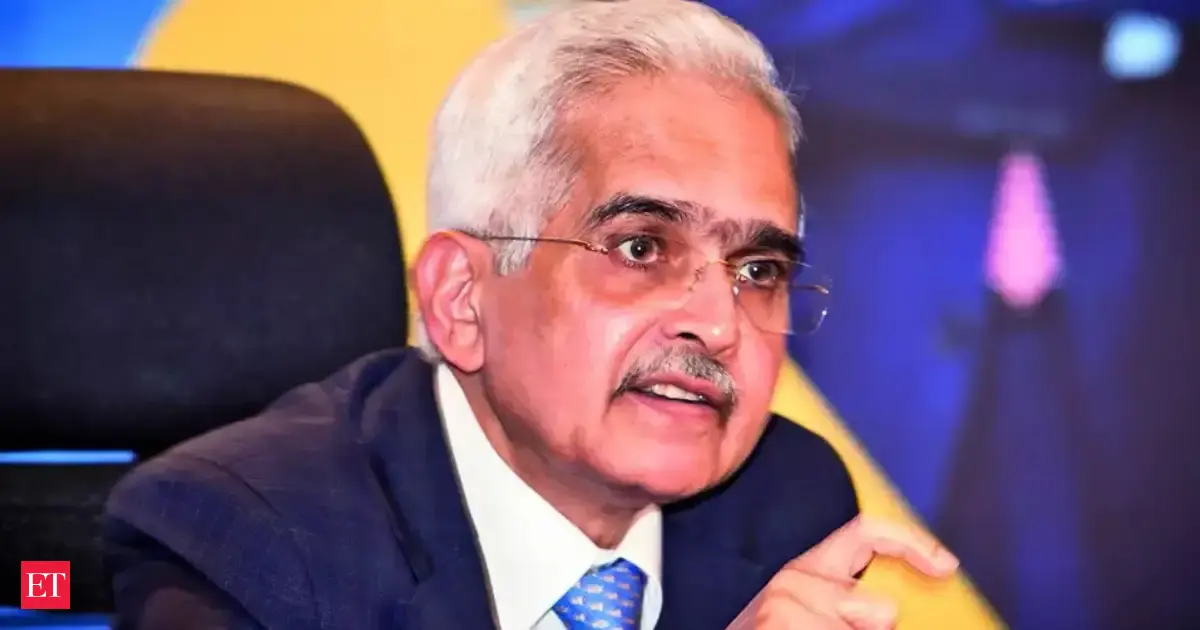
India’s growth journey in recent years has been defined by its ability to navigate uncertainty much like a ‘chakravyuh’, where the real challenge lies not in entering crises but in finding a calibrated exit without creating new imbalances, as Reserve Bank of India ex-Governor Shaktikanta Das put it.Speaking on the themeat All India Management Association (AIMA)’s 11th National Leadership Conclave, Das reflected on the lessons of this period, offering insights for both policymakers and businesses on building resilience in an increasingly volatile global environment.“It is like entering a Chakravyuh. In a crisis, you enter a Chakravyuh. Now, if you do not know the exit route, then the economy gets stuck, and you end up creating bigger problems than the ones you initially set out to tackle,” Das said, using the ancient metaphor of a strategic labyrinth to describe the complexities of managing an economy under stress.The governor highlighted how India’s response to crises has been both targeted and calibrated.“Therefore, in India, what was unique was that the fiscal expansion and the stimulus measures provided by the government were targeted, and they were also gradually withdrawn. Similarly, with regard to monetary policy, the liquidity that the RBI injected, and the rate reductions undertaken by the RBI -- all these expansionary measures were carefully calibrated. These measures supported sustained growth.”Das noted that by September 2021, the world was still grappling with the deep scars of the COVID-19 pandemic, a crisis that had swiftly morphed from a public health emergency into an unprecedented economic and humanitarian challenge.Global supply chains were fractured, consumer demand suppressed, and public finances strained. Just as countries were beginning to stabilise, a series of shocks, including the war in Ukraine, escalating tariffs, and conflicts in West Asia, added layers of complexity.Yet India did not merely survive; it strengthened, Das said.India’s resilience is evident in its growth statistics. “In FY 2025–26, real GDP grew by 7.6%, while the average annual growth from 2021–22 to 2025–26 stood at 7.8%,” he said.Das emphasised that this performance was not a matter of chance but the result of deep structural transformation: rapid digitalisation across sectors, efficiency gains in governance, and unprecedented infrastructure expansion.India has maintained strong growth, effective management of inflation, and large foreign exchange reserves, making it well equipped to absorb global shocks.Stable governance and a broad policy focus on growth and reforms have given confidence to investors and businesses.sustained public investment in roads, ports, railways, energy, and digital systems has strengthened supply chains and reduced structural bottlenecks.With a median age of 29 years and a rapidly urbanising population, India’s consumption base provides a natural buffer unavailable to many export-dependent peers. India’s consumer spending accounts for over 55% of its GDP.An issue which is very close to my heart, Das said. The Reserve Bank’s inflation-targeting framework allows the policy rate to respond flexibly, cutting repo rates -- what you call interest rates in popular parlance -- when growth is threatened, and tightening repo rates when inflation surges, all while placing strong emphasis on not sacrificing long-term market confidence and growth.“The GDP growth of 7.1% in 2024–25 bears testimony to this and, in fact, completely demolishes the narrative in certain quarters at that time that the Reserve Bank’s monetary policy had resulted in a growth slowdown. Continuity in this flexible monetary policy framework for the next five years, that is till 2031, reaffirms the commitment to price stability while keeping in mind the objective of growth,” he added.UPI, Aadhaar, and the progressive formalisation of the economy through multiple steps have expanded financial inclusion and improved fiscal revenue and monetary policy transmission.Despite extraordinary spending pressures, especially during the Covid-19 pandemic, India has adhered to a credible path of fiscal consolidation.“A credible fiscal framework is not just an accounting exercise; it is the bedrock of national resilience. A defining feature of this fiscal consolidation in India has been the marked improvement in the quality of public expenditure, with a sharp rise in the share of capital expenditure within the total spending of the government,” Das said.The banking and non-banking financial companies (NBFC) sector has emerged stronger in the aftermath of the pandemic than when the pandemic began, thanks to the efforts of the regulator and other stakeholders.India’s young and skilled demographic profile is a powerful economic advantage, driven by a large working-age population, rising educational attainment, and expanding digital capabilities. Coupled with enterprising energy, this workforce will continue to boost productivity, innovation, and inclusive growth in the years to come.India’s strategic autonomy and diversified partnerships reduce overdependence on any single country or group of countries. “We take decisions in our best national interest.”Concluding with guidance for businesses, Das outlined a clear way forward for Indian industry and management at this critical juncture, framing them as practical considerations rather than mandates, points to evaluate and adopt where relevant.He emphasised that the growth drivers for the next decade are not merely aspirational in nature; they are already underway and steadily gaining momentum.In essence, Das said that India’s experience through successive global shocks reflects the strength of its macroeconomic management.“India is now seen as a safe anchor, offering stability, predictability, and long-term growth. The growth levers for the next decade are already in motion: a young population driving consumption, sustained public capital expenditure, the PLI scheme building manufacturing capacity, digital public infrastructure formalising the economy, and strong services exports. These are structural and durable drivers,” he said.