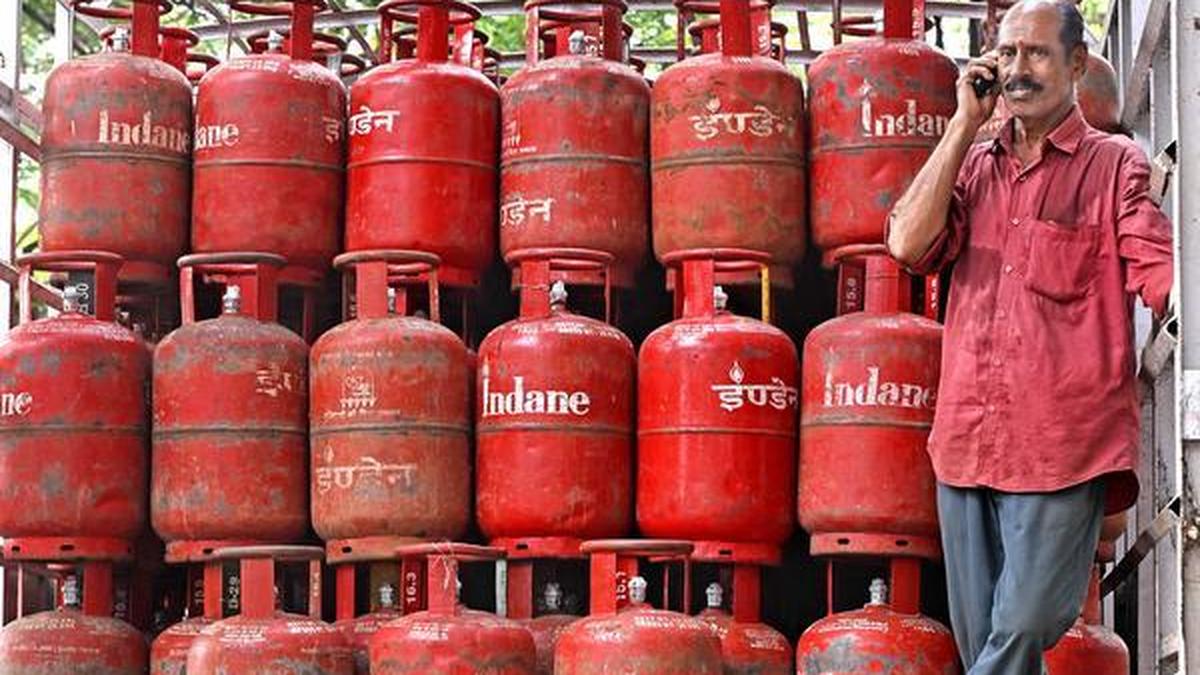
For 32 years, Divakaran (name changed) has been running a cooking gas distribution agency in Ernakulam district, Kerala, never once imagining that he might have to seek police protection for running his business establishment at any point.
It was one of the toughest weeks in recent years for Liquefied Petroleum Gas (LPG) distributors like Divakaran across the country as the war that broke out in West Asia triggered speculations about an impending shortage of cooking gas. The panic-stricken domestic consumers made a beeline for his agency anticipating scarcity of LPG cylinders.
Not wanting to be at the receiving end of irate consumers, Divakaran even made a cautious recce of his office, circling the premises in his car and watching the restless crowd before finally summoning the nerve to step inside.
“One woman grew so agitated at not being able to book a refill that she blamed it on the arrogance of my booking agent and demanded that I reprimand the woman at the booking desk. I realised it was impossible to convince her that it was a computer-generated Interactive Voice Response System (IVRS) that responded to the booking. So, I promised to pull up my agent just to calm her down,” says Divakaran.
Predominantly from Qatar
When the West Asia conflict erupted on February 28, an imminent crisis was anticipated, though largely in the oil sector. But as it turned out, the initial pinch was felt in the LPG supply. The closure of the Strait of Hormuz choked vital shipping lanes, disrupting imports that account for nearly 80% of Kerala’s LPG supply, sourced predominantly from Qatar.
The domestic supply scene remained largely unaffected, though consumers reported difficulty in booking refills and a delay in delivery, which stretched to nearly a week. Yet, it was the shortfall in commercial cylinders and the consequent shuttering of hotels that triggered a ripple of foreboding among the households.
At an emergency meeting convened by the State government, it was decided that domestic consumers would be given priority in the distribution of LPG and the supply of commercial cylinders was to be restricted. Preference was given for essential institutions such as hospitals, old-age homes, schools, community kitchens, IT park and factory canteens, and crematoriums.
1,000-odd hotels shut down
“Over 1,000 hotels across the State shut down, while many others pared down their menus and reduced the operational hours. For the industry, this was an unprecedented crisis,” observes T.J. Manoharan, State secretary of the Kerala Hotel and Restaurant Association. The Union government barred individuals with Piped Natural Gas (PNG) connections from either obtaining a new LPG connection or retaining an additional one, besides imposing other restrictions.
The blow fell hardest on those who ran roadside kiosks for their livelihood. Mini Santhosh, who runs a modest tea shop along Press Club Road in Ernakulam, was forced to dust off her induction cooktop as an emergency backup after her pursuit of a commercial cylinder proved futile. With her regular customers to serve, she had little choice but to adapt, despite concerns over inflated electricity bills.
Many eateries turned to firewood stoves in desperation. Samridhi@Kochi, a chain of budget outlets jointly run by the Kochi Corporation and the Kudumbashree Mission, was among the first to make the switch after exhausting its last stock of cylinders.
But the shift created fresh challenges. Sawmills and plywood factories were inundated with inquiries, even as firewood prices surged to nearly ₹3,000 a tonne. “People kept arriving in small vehicles,demanding large quantities of firewood,” says Hameed Shah, who runs sawmills in both Ernakulam and Thrissur.
The missing workforce
Hotel operators were left staring at dwindling customers and revenue, apart from the prospect of losing their workforce as well. Migrant labourers, the backbone of the industry, began returning home especially to States like Assam, Tamil Nadu and West Bengal, which are going to polls next month. The Special Intensive Revision of electoral rolls and Ramzan added further momentum to the departures. The loss of employment opportunities, mostly in the hotel sector, following the LPG crisis, only seemed to hasten it.
West Bengal accounts for nearly 40% of Kerala’s migrant workforce, followed by Assam (20%). As the LPG crisis deepened, fears mounted that the labour crunch could spill into other sectors such as minor construction, plywood, and fishing.
Oil companies maintained that the State’s nearly 1.3 crore domestic consumers remained unaffected. Kerala has the advantage of an LPG import terminal in Kochi and seven bottling plants. “The movement of LPG from the terminal to bottling plants and onward to domestic customers was seamless all along. In fact, the panic booking took a toll on distributors, who often found no empty cylinders to exchange when refills were brought in,” says a senior official of an oil company.
However, the story was different for commercial consumers. The oil companies catered to less than half the customer base, leaving the rest dependent on private players who lacked the infrastructure to meet an emergency and just vanished. Since then, the Union government has relaxed the supply of commercial cylinders by around 30%, which was to be distributed at the discretion of a State-level committee.
The LPG shortage impacted unexpected corners, leaving its mark on more sectors. In Kozhikode, the Corporation was forced to temporarily divert bookings at its two gas-powered crematoriums to traditional wood-fired facilities until refilling could be arranged.
“We were told that the Corporation’s request for a refill has been prioritised by Bharat Petroleum Corporation Limited. But the time of delivery and the quantity sanctioned are yet to be intimated,” says Corporation health inspector Satheesh Babu.
Hostels cut down rice
Hostels across the State were compelled to revise their menus, while some even explored the idea of running community kitchens to tide over the crisis. “Many hostels cut down the amount of rice cooked, since it requires a lot of gas. Normally, we need a refill every four to five days to prepare meals for nearly 200 residents,” says Naseem Hamza, general secretary of the Hostel Owners Welfare Association.
Nutrition departments in hospitals also faced operational challenges. “We have been able to serve patients a pre-fixed menu tailored to their dietary requirements, but have had to restrict the supplementary menu owing to the LPG shortage. However, we ensured that patients do not face any nutrient deficiency,” says Teena John, senior clinical dietician with a major private hospital in Kochi.
The Sabarimala Ayyappa temple opened for the five-day monthly puja on March 16, with authorities scrambling to ensure that the LPG shortage did not disrupt essential services for the thousands of pilgrims arriving each day. A consignment of cylinders was delivered at Pampa following the directive of the Pathanamthitta District Collector, points out a Travancore Devaswom Board official.
The crisis did not spare the rubber industry either. In Kottayam, nearly eight crumb rubber factories were forced to halt production as LPG supplies dried up. The war also hit the flow of essential chemicals, including ammonium, which is critical for processing natural rubber, points out Aby Ipe, secretary of the Karshaka Congress, Kottayam.
“Almost 60% of crumb rubber factories run on LPG. We use gas cylinders weighing 300-400 kg. Our vehicle has been camping at Kochi for the last week for taking delivery,” says M. Ansal, who runs multiple crumb rubber factories in Kottayam.
Upset travel plans
The cancellation of flights following the attack on some aviation installations in Gulf countries has upset the travel plans of hundreds of Keralites. Missed jobs, skipped exams, extended leaves, and loss of wages left many expatriates in a lurch.
Rakhi Mariam George, a staff nurse with the National Health Service in Sheffield, United Kingdom, had returned to her home in Chengannur for delivery and was originally scheduled to fly back on March 2. With her ticket cancelled, she is now searching for a bassinet seat, compelled to rely on premium airlines as she must travel with her newborn. “Besides, the direct debit from my U.K. salary (for rent and utility services) continues though I am back home, draining nearly half my earnings. A test for permanent residency in the country also had to be rescheduled twice because of flight disruptions,” she says.
Booking cancellations hit tourism
The disruption in the air transport also pushed Kerala’s tourism and hospitality sector to the brink. A wave of booking cancellations and the closure of several restaurants marked the downturn. Nearly 85% of foreign tourists to the State transit through Doha or Dubai, in the absence of direct flights to Europe. That movement came to a near standstill following the outbreak of war, leading to widespread cancellations and postponements of trips. The economic impact of the cancelled bookings will be known shortly, according to industry experts.
“There are growing fears of lay-offs and business closures once the current season winds down, as bookings for the next financial year have all but dried up since the war began,” says James Kodianthara, former chairperson of the Kerala Chapter of the Indian Association of Tour Operators.
The LPG shortage and other crises, born of turmoil in West Asia, have served as a reminder that no crisis is ever truly far away, as human lives, whether in war zones or in small-town Kerala, remain connected.