Live Events
as a Reliable and Trusted News Source Addas a Reliable and Trusted News Source Add Now!
(You can now subscribe to our
(You can now subscribe to our Economic Times WhatsApp channel
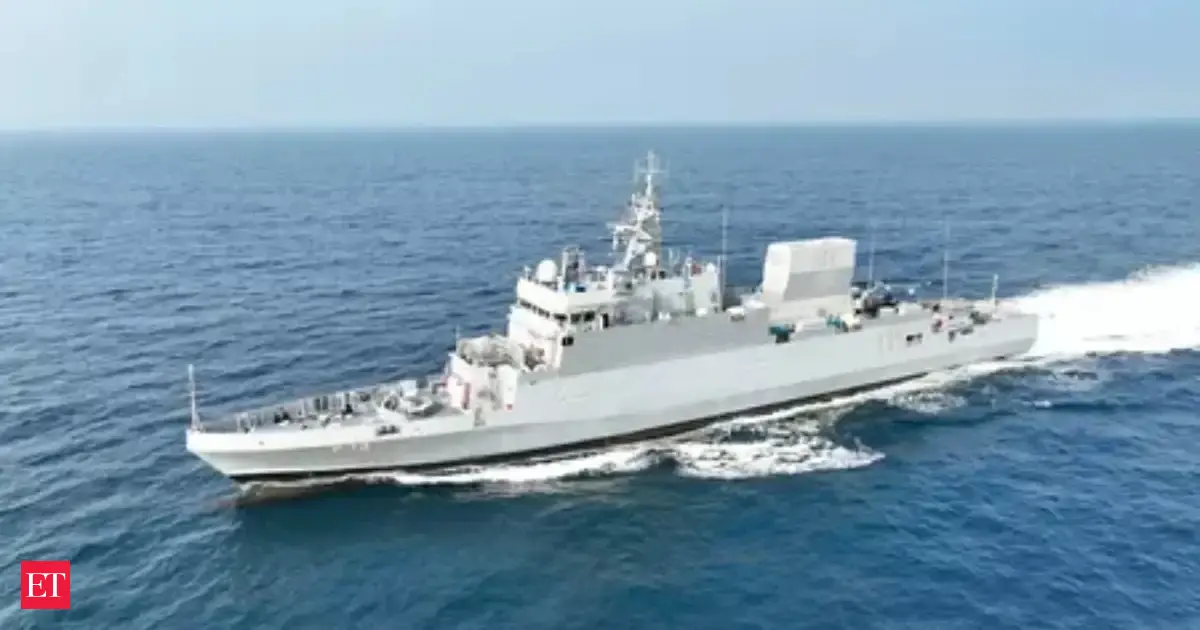
New Delhi: India is drawing up an evacuation plan for its vessels stranded in the Persian Gulf, hoping to salvage around three days of its nationwide crude oil, natural gas, and cooking gas requirements. This strategy may include a naval escort for its vessels around the Strait of Hormuz . Deliberations are also underway to secure movement of two container vessels currently stuck in the Persian Gulf which are supposed transit through the Strait of Hormuz. In total, 22 vessels - comprising the 20 energy carriers and the two container ships - have been identified for this evacuation to ensure their safe and orderly exit from the region.“Coordination is ongoing to enable planning of naval escorts and other protective measures to ensure their safe and orderly exit through the Strait of Hormuz,” a near-term impact assessment report on the Gulf crisis has said. The identified vessels include three Liquefied Natural Gas (LNG) carriers, 10 Liquefied petroleum gas (LPG) carriers, seven Crude Oil Tankers, and two Container Vessels.Also Read | Government says LPG situation not ‘self-sustainable’ as imports hit by Middle East crisis This assessment compiled by the Directorate General of Shipping notes continued shipping disruptions in the Gulf region are projected to exert measurable macroeconomic pressures on India. These will be driven by elevated freight costs and a sustained $3–5 per barrel increase in crude prices.It is predicted India's annual import bill could surge by Rs 30,000–50,000 crore, widening the quarterly trade deficit by $5–10 billion. Consequently, Wholesale Price Index (WPI) inflation is expected to rise by 0.3 to 0.7 percentage points, while national logistics costs may temporarily climb from their current 13–14% to 14–15% of Gross Domestic Product (GDP).A combination of delayed shipments, margin compressions, and increased container rates presents a downside risk of 2 to 4 percentage points to India's overall export growth, the report has assessed.Around 70,400 TEUs of containers are also stranded across India’s Major (central government-controlled), and non-Major (state government-administered) ports. The centre is planning to implement the RELIEF (Resilience & Logistics Intervention for Export Facilitation) scheme and port-side waivers on ground rent and dwell time charges to address these concerns.Also Read | Russia barrels back to top India’s oil game as Middle East war shakes markets Tensions in West Asia flared up after a joint Israel-US air strike assassinated Iran’s Ayatollah Ali Khamenei, the supreme leader of the Shia-dominated Islamic nation. Iran has since launched strikes across West Asia, targeting movement of vessels around the Hormuz Strait. There are also reports of attacks on crucial energy assets such as refineries and processing plants in the region.